Advance your Career with BCIT Specialty Nursing
Advance your career in high-demand nursing specialties with BCIT’s accredited, employer-recognized programs. Whether you’re an RN, LPN, internationally educated nurse, or in a related healthcare profession, our flexible learning options help you gain expertise while balancing work and life.
Why choose Specialty Nursing at BCIT?
With high demand specialty streams, accredited programs, and recognition of prior experience, there are lots of reasons to study with BCIT.

Flexible Learning Options
Designed to accommodate working professionals, our online and hybrid courses allow you to enhance your skills and advance your career while continuing to work full time.
Career Advancement
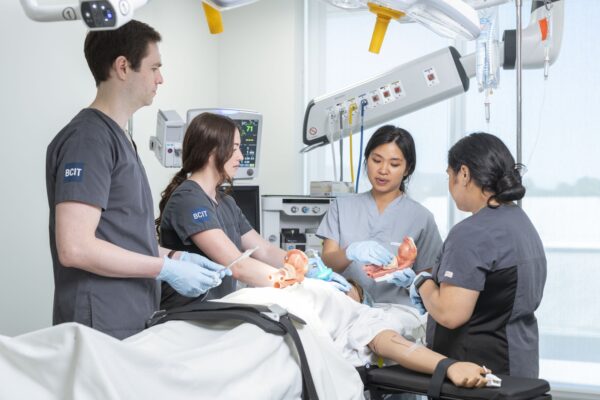
With over ten specialty streams, dozens of continuing education options, and prior experience recognition, position yourself for rapid progression into advanced high-skill, high-reward practice areas.
Expert-Led Education
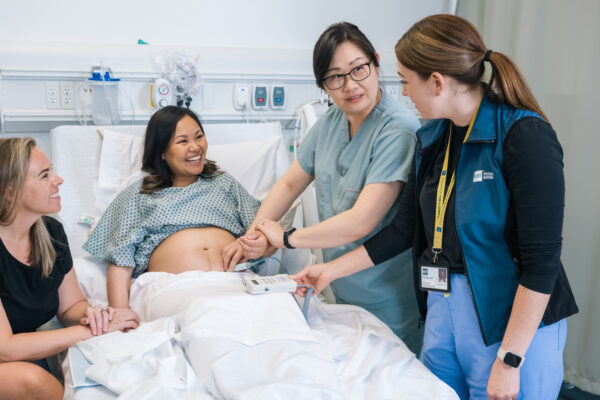
Programs are taught by industry leaders who provide real-world insights and mentorship, giving you the expertise and confidence to make a meaningful impact wherever your nursing career takes you.
Find the right Specialty Nursing option for you
Explore by category to find the right fit for your career path.
Specialty Nursing programs
Take your nursing career to the next level in high-demand specialty areas, and graduate with a credential. Specialty Nursing programs empower you to deepen expertise, elevate credentials, and thrive in today’s dynamic healthcare environment. Both part-time and full-time industry sponsored options may be available.
| Program | Who’s it For |
| Critical Care Nursing Specialty
The BCIT Critical Care Nursing Specialty is an exciting and dynamic program that prepares registered nurses (RNs) with the knowledge, skills and abilities required to work in all levels of intensive care units (from community/rural to tertiary and quaternary), coronary care and cardiac surgery intensive care units, and post anesthetic care units. |
RNs |
| Combined Critical Care/Emergency Nursing
Critical care courses and clinical experiences prepare you to care for patients who are seriously ill, such as acute coronary syndrome, cardiac failure, advanced hemodynamic monitoring, and acute respiratory failure. Emergency courses provide skills to assess and support the different illnesses and injuries found in an emergency care setting. |
RNs |
| Emergency Nursing Specialty
This highly niched program prepares you to work in the fast-paced, dynamic emergency care environment. No two shifts are the same, with patients who change constantly and have many different reasons for needing emergency care. Emergency nurses take on leadership, support, and decision-making roles to provide the best patient care possible. |
RNs |
| Combined Emergency/Critical Care Nursing Specialty
Emergency courses and clinical experiences give you the skills to support the diverse array of illnesses and injuries you could see on a given shift. Our critical care courses educate you in strategies, such as advanced hemodynamic monitoring and mechanical ventilation, to optimize care and comfort for acutely ill patients. |
RNs |
| High Acuity Nursing Specialty
High Acuity nursing practice builds on the foundational medical-surgical knowledge and skill set of a registered nurse (RN) to care for acutely ill patients with complex, multi-system health challenges. The varying clinical contexts of patients on these specialized units necessitates an individualized approach to nursing care and management of advanced interventions. |
RNs |
| Neonatal Nursing Specialty
We equip nurses to care for infants who are in the first month of their lives and need hospitalization in neonatal nurseries and neonatal intensive care units (NICUs). Our program trains you in the technical and emotional skills to effectively support infants and their families during this challenging time. |
RNs |
| Nephrology Nursing Specialty
Nephrology nurses work closely with patients who require ongoing care or life-sustaining treatment. Using dialysis, renal transplantation, and other treatment methods, nephrology nurses manage illnesses such as chronic kidney disease and end-stage renal disease. Their work directly impacts quality-of-life and end-of-life care for renal patients. |
RNs, LPNs |
| Pediatric Nursing Specialty
Pediatric nursing is dedicated to the health and care of young people, ranging from babies to teenagers. Children, as patients, have unique healthcare needs that require specialized knowledge and expertise in their growth, illness, and injury. |
RNs, LPNs* |
| Pediatric Nursing Specialty – Anesthesia Care Option
The pediatric perianesthesia nursing program focuses on the unique needs of children before, during, and after anesthesia. It prepares nurses to provide safe, developmentally informed care, manage anxiety and pain, and support families through surgical and procedural experiences with specialized knowledge and skill. |
RNs, LPNS* |
| Pediatric Nursing Specialty – Critical Care Option
This program prepares nurses to care for the most critically ill infants, children, and teens. It equips them with specialized knowledge, advanced assessment skills, and the confidence to support young patients and their families through complex, high-acuity illnesses and injuries. |
RNs, LPNS* |
| Pediatric Emergency Nursing Specialty
Pediatric emergency nursing is dedicated to the health and care of young people, ranging from babies to teenagers. Children, as patients, have unique healthcare needs that require specialized knowledge and expertise in their growth, illness, and injury. |
RNs, LPNS* |
| Perinatal Nursing Specialty
Perinatal RNs work in partnership with childbearing women and their families, providing education and support to empower their patients with skills to care for their families. In a dynamic work environment, perinatal nursing requires technical expertise, sensitivity, and excellent communication skills to effectively support the women they care for. |
RNs, LPNs* |
| Perioperative Nursing Specialty
BCIT’s Perioperative Nursing Specialty Program delivers advanced nursing education for nurses looking to specialize in the operating room. Perioperative nurses are an integral part of the surgical team, collaborating with surgeons, anaesthesiologists and many more. Perioperative nursing consists of two main roles: the scrub nurse and the circulating nurse, both contributing to surgical patient outcomes. |
RNs, LPNs |
*Licensed Practical Nurses (LPNs) may be eligible to enroll in theory-based courses. Please contact the department to confirm your eligibility.
| Program | Who’s it For |
| Bachelor of Science – Specialty Nursing Degree
BCIT has the only post-RN academic program in BC that combines advanced specialty nursing education and academic Bachelor of Science in Nursing (BSN) courses. Choose to complete the program in the order that works best for you. Graduate with both a Bachelor of Science in Nursing and an advanced certificate in one of the nursing specialties. |
Diploma RNs |
Continuing education options
Expand your healthcare expertise in specialized areas in select specialty courses. These flexible offerings support professional growth, foster interdisciplinary collaboration, and deepen industry knowledge. See individual course details for requirements.
| Course | Who Its For |
| NSIN 7110 – Nursing in Canada: Legal, Ethical, and Equity Perspectives (Badge)
This microcredential badged course supports internationally educated nurses (IENs) in transitioning to professional nursing practice in British Columbia, Canada. This course emphasizes the foundational knowledge needed to thrive as an RN in Canada, and provides a broad overview of the regulation of nursing practice in Canada, with a focus on the role and mandate of the BC College of Nurses and Midwives (BCCNM). Nursing in Canada students may be eligible for a Transitional Education Bursary to cover the tuition cost of this course. |
Any IEN (coming to BC), RN, LPN, or NP exploring nursing practice |
Sexual and Reproductive Health Foundations
The Sexual and Reproductive Health Foundations microcredential provides the foundations for nurses passionate about providing person-centered sexual health care in the areas of sexually transmitted infections (STIs) and contraceptive care. Each of the two courses reviews the diversity of human sexuality, models of care, and clinical approaches to STIs and contraceptive care, while examining values and attitudes.
Developed in partnership with Options for Sexual Health (OPT), BCIT’s curricula teach and apply the knowledge and Decision Support Tools (DST) required for safe, competent and ethical clinical practice. Successful completion of these courses allows for registration to certified practice in the respective area(s) of reproductive health for Registered Nurses and Registered Midwives.
| Microcredential Courses | Who It’s For |
| NSPN 7720 – Contraceptive Management in Reproductive Health (Certified Practice)
This 6 week online self-paced, course is for Registered Nurses (RNs) and Registered Midwives (RMs) who are seeking competencies for Contraceptive Management Certified Practice. Students will be provided with the minimum requirements for safe assessment, provision and management of Combined Hormonal Contraception (CHC) and Progestin only Hormonal Contraception (POC). |
RNs, RMs |
| NSPN 7735 – Sexually Transmitted Infections Management
This 10 week online, asynchronous and self-paced course provides students with baseline theoretical knowledge for diagnosing and treating various sexually transmitted infections (STIs). Students will apply the theory learned to the development of clinical skills, within the scope of certified nursing practice, with clients experiencing or at risk for STIs. |
RNs, LPNs/RPNs* |
| Additional Requirement for STI Certified Practice | Who It’s For |
| NSPN 7736 – Sexually Transmitted Infections Management Clinical (Certified Practice)
This course is a 25 hour (20 – 24 hours of clinical time, with the remaining hours for assessing clinical competency) clinical course for which NSPN 7735 is a pre-requisite (NSPN 7710 is also strongly recommended). Within the scope of nursing practice with clients experiencing, or at risk for sexually transmitted infections (STIs), students will learn various clinical skills designated as BCCNM certified practice. Students enrolling in this course must have completed NSPN 7735 and hold current BCCNM registration. |
RNs |
*LPNs and RPNs prior approval needed from the specialty area
Centered on an existing competency framework and principles of sexual health rehabilitation, this 2-course, 6-credit microcredential is designed to prepare a diverse group of learners to assess for patients’ sexual concerns within their specific discipline of practice. Learners will acquire skills to provide psychoeducation and support to patients in a way that is person-centred, culturally safe and trauma informed. This will involve effective integration of sexual rehabilitation principles, frameworks and communication strategies and offering practical resources related to sexual health and wellbeing.
| Microcredential Courses | Who its For |
| NSPN 7741 – Introduction to Sexual Health Rehabilitation
This introductory course is unique in Canada. It introduces health care professionals to the complex biopsychosocial role that sexual health has in patient care and best practice standards for this practice. The course uncovers the interplay between physiological, psychological and social contexts of sexuality and sexual function through an exploration of the health care professional’s personal values and beliefs around sexuality. |
RNs, LPNs |
| NSPN 7751 – Advanced Sexual Rehabilitation
This advanced course will build upon the concepts explored in course NSPN 7741 – Introduction to Sexual Health Rehabilitation. The course examines, from an intersectional perspective, the impact of biases and stigma as they relate to concepts of sexuality and sexual well-being in society. |
RNs, LPNs |
Sterile Field and the Aseptic Environment
The Sterile Field and the Aseptic Environment (SFAE) microcredential is an innovative program designed to prepare or upskill a broad and diverse group of learners with the foundational theoretical knowledge to work effectively and safely with sterile fields and in aseptic environments, both in and out of healthcare.
| Courses | Who it’s For |
| NSPO 1110 – Basics of Sterility and Aseptic Techniques (Badge)
This is the first badge for the Sterile Field and the Aseptic Environment (SFAE) microcredential. In this badge, learners will receive a fundamental introduction to the aseptic environment, covering environmental controls and sterilized items. Learners will explain how sterility and asepsis are used to maintain a safe environment for clients, self, and others. The focus of this badge is on practical knowledge within an environment ranging from semi-restricted to unrestricted. |
Open to All |
| NSPO 1120 – Advanced Practice in the Aseptic Environment (Badge)
This badge is the second badge for the Sterile Field and the Aseptic Environment (SFAE) microcredential. The badge builds on the foundation of an aseptic environment presented in NSPO 1110. The focus is on developing knowledge of sterility and aseptic techniques for clients inside an operating room where invasive procedures are performed. Learners will continue advancing their knowledge around concepts of sterility and asepsis to keep clients safe from the risk of infection by introducing surgical zones and attire that is required within semi-restricted and restricted zones. |
Open to All* |
| NSPO 1130 – Advanced Knowledge for Minor Sterile Ambulatory Surgical Procedures (Badge)
This badge is the third badge of the Sterile Field and the Aseptic Environment (SFAE) microcredential. The badge builds on and draws upon the foundation of an aseptic environment presented in NSPO 1110 and NSPO 1120. The focus is on developing an understanding of safe client care for smaller procedure sites such as an ambulatory care setting. Learners will continue considering the concepts of sterility and asepsis with emphasis on the nursing role. |
Open to All* |
*Health Care experience is preferred or prior approval needed from program area
Advanced Perioperative Nursing
These standalone badge courses are bite-sized courses focused on advancing perioperative nursing knowledge and skills in various surgical specialty services. All courses are available through BCIT Flexible Learning online. Each course has a tutor to provide feedback on assignments and ask questions as you move through the content. Register anytime and complete courses at your own pace within the given course timeline.
| Courses | Who Its For |
| NSPO 7811 – Advanced Perioperative Nursing: Gastrointestinal Surgery (Badge)
This badged course is designed for perioperative nurses seeking advanced knowledge in gastrointestinal (GI) surgery. The course provides a comprehensive overview of key procedures involving the stomach, pancreas, liver, spleen, and lower GI tract. The esophagus, although part of the GI tract, will not be part of this badge because of its location in the thoracic cage. Additionally, you’ll dive into the surgical management of hernias, a common but critical aspect of abdominal surgery. |
RNs, LPNs, RPNs in a perioperative or equivalent setting |
| NSPO 7822 – Advanced Perioperative Nursing: Obstetric and Gynecological Surgery (Badge)
In this badged course, learners will expand their obstetric and gynecological (ob-gyn) perioperative nursing education, advancing beyond novice practice, focusing on immediate practical knowledge application. Within this badged course, learners will have the opportunity to explain in depth the perioperative nursing role for ob-gyn procedures and develop a plan of care for persons undergoing these procedures in both the scrub and circulating roles. |
|
| NSPO 7833 – Advanced Perioperative Nursing: Genitourinary Surgery (Badge)
In this badged course, learners will expand their urological perioperative nursing education, advancing beyond novice practice, focusing on immediate practical knowledge application. Within this badged course, learners will have the opportunity to explain in depth the perioperative nursing role for urology procedures and develop a plan of care for persons undergoing these procedures in both the scrub and circulating roles. |
|
| NSPO 7844 – Advanced Perioperative Nursing: Orthopedic Surgery (Badge) Coming soon… |
| Specialty Area | Course | Who it’s For |
| Critical Care | NSCC 7150 – Dysrhythmia Interpretation and Management
This course supports the development of fundamental knowledge required to systematically analyze and interpret basic cardiac dysrhythmias. Learners will explore myocardial electrophysiology in relation to cardiac monitoring and develop a systematic approach to dysrhythmia analysis and interpretation. Learners will also consider the predisposing factors of all conduction defects and the consequences of dysrhythmias to both systemic and myocardial oxygen supply and demand. Additionally, interventions for dysrhythmias are also discussed. Lastly, the significance of dysrhythmia analysis, interpretation, and management to critical care nursing practice will be explored. Though this course is conducted within the specific context of critical care nursing practice, it is also suitable for other nurses or qualified health professionals requiring this skill. |
RNs, Related healthcare professionals |
| Emergency | NSER 7800 – Emergency Nursing and Mental Health
This practice-based course has been developed for nurses caring for patients experiencing mental health challenges or patients experiencing physical illness/injury with a concomitant mental health component. This course is suitable for all nurses working in rural, community, or tertiary hospital emergency departments as well as community settings. |
RNs |
| High Acuity | NSHA 6000 – Early Recognition Rapid Action (ERRA) of the Deteriorating Patient (Badge)
This badge course provides foundational theoretical knowledge to help nurses identify, assess, and initiate interventions for patients experiencing rapid clinical deterioration. It addresses three key areas: Primary Assessment, which enables nurses to identify the patient’s priority problem or problems; Oxygen Supply and Demand Theory, which provides a framework for interpreting assessment cues and selecting appropriate interventions; and the Situated Clinical Decision-Making Framework, which guides nurses through the care of a rapidly deteriorating patient by supporting cue gathering, judgment formulation, intervention implementation, and ongoing evaluation and re-evaluation. This knowledge is applicable across diverse patient care contexts, including acute and non-acute care, rural settings, and community environments. |
RNs |
| Nephrology | NSNN 7425 – Advanced Peritoneal Dialysis (Badge)
This badge course examines the principles, theoretical foundations, and clinical application of peritoneal dialysis (PD) within the context of nephrology nursing practice. Learners will explore concepts of transition and adaptation to support individuals and families as they navigate the physical, psychosocial, and self-care demands associated with living with PD. The course focuses on comprehensive nursing assessment, evidence-informed care planning, and clinical management of clients receiving peritoneal dialysis. Emphasis is placed on integrating self-management support strategies, including collaborative goal setting, to promote client engagement and effective self-directed management of dialysis care. |
RNs working in renal care |
| Pediatric | NSPE 7800 – Adolescent Care in Perianesthesia Nursing (Badge)
This badge course focuses on the unique and highly specialized area of pediatric anesthesia care nursing, specifically 11 to 17-year-old adolescent patients. Building on the foundational concepts of adult perianesthetic and critical care, this course will consider the growth and development and the unique physiological considerations of an adolescent. Learners will develop a deeper understanding of pediatric pathophysiology, assessment, and decision-making related to the adolescent who is undergoing sedation and anesthesia. In addition, learners will further explore other important concepts related to the post-anesthesia care of adolescents including: neurodiversity, diversity, equity and inclusion, family centered care, mental health, and pain management. Learners will be challenged to make clinical decisions and plan care for adolescents undergoing sedation and general anesthetic procedures using case-based scenarios. |
RNs |
| NSPE 7801 – Pediatric Cardiac Care Nursing Essentials (Badge)
This badge course covers essential pediatric cardiac nursing, building on pediatric nursing foundations. It explores growth, development, and the unique anatomy and physiology of children with congenital heart defects. Learners will deepen their understanding of pediatric cardiac pathophysiology, assessment, decision-making, and long-term outcomes after surgery. The course also reviews basic ECG interpretation and common pediatric dysrhythmias through case-based scenarios. Additional topics include neurodiversity, equity, family-centered care, mental health, and pain management in pediatric cardiac patients. |
RNs | |
| Perinatal / Sexual Health | NSPN 7710 – Pelvic Exam Course
The purpose of this course is to examine the trends and issues in the health and health care of patients in relation to reproductive health and pelvic exams. The course builds on the nurse’s/clinician’s knowledge and skills in reproductive health to enable them to offer a quality, patient-centered cervical cancer screening and Sexually Transmitted Infection (STI) testing for whom services are inadequate or inaccessible. |
RNs, clinicians whose scope of practice includes pelvic examinations |
Undergraduate nursing electives
Build expertise early through a selection of specialty nursing courses. Gain a deeper understanding of specialized nursing practice areas and prepare for future roles in diverse healthcare settings.
| Specialty Area | Course |
| Critical Care | NSCC 7120 – Critical Care Theory 1
This introductory course establishes the core principles of critical care nursing, providing a strong foundation for practice in this fast-paced and complex environment. It begins with an exploration of key factors influencing clinical decision-making, including the specialized role of critical care nurses, the complexities of critical illness, the depth of knowledge required to understand each patient’s condition, and the lived experiences of both patients and healthcare professionals within the field. Learners will be introduced to the Oxygen Supply and Demand Framework (OSDF), and a structured approach that supports systematic assessment and clinical reasoning. By emphasizing the balance between oxygen supply and demand, the OSDF helps organize assessment findings and strengthens clinical judgment—essential skills for managing critically ill patients. Building on this foundation, the course advances into arterial blood gas analysis and hemodynamic assessment, equipping learners with the skills needed to interpret and respond to increasingly complex patient needs. |
| NSCC 7150 – Dysrhythmia Interpretation and Management
This course supports the development of fundamental knowledge required to systematically analyze and interpret basic cardiac dysrhythmias. Learners will explore myocardial electrophysiology in relation to cardiac monitoring and develop a systematic approach to dysrhythmia analysis and interpretation. Learners will also consider the predisposing factors of all conduction defects and the consequences of dysrhythmias to both systemic and myocardial oxygen supply and demand. Additionally, interventions for dysrhythmias are also discussed. Lastly, the significance of dysrhythmia analysis, interpretation, and management to critical care nursing practice will be explored. Though this course is conducted within the specific context of critical care nursing practice, it is also suitable for other nurses or qualified health professionals requiring this skill. If you are not a registered nurse or a student nurse in the final years of your BSN program, you must consult the Critical Care Nursing Program Head before registration. Health professionals who are not nurses may register for this course with the approval of the Critical Care Nursing Specialty Program Head. If you are registering in the NSCC, NSHA or NSER nursing program, follow the program course matrix. Program Head approval is required to take NSCC 7150 as a co-requisite with NSCC 7120, NSCC 7220, NSHA 7100, or NSER 7110. To be successful in the course, learners must achieve 75% or higher on each evaluative component in the course. |
|
| Emergency | NSER 7110 – Emergency Theory 1
This course Introduces emergency nursing and focuses on client perspectives of care in emergency settings. Provides opportunities to explore the concept of partnership with clients, families, and health care professionals in a time limited, changing environment. Introduces emergency skills such as assessment, urgency determination, and diagnostic reasoning. |
| NSER 7800 – Emergency Nursing and Mental Health
This practice-based course has been developed for nurses caring for patients experiencing mental health challenges or patients experiencing physical illness/injury with a concomitant mental health component. This course is suitable for all nurses working in rural, community, or tertiary hospital emergency departments as well as community settings. |
|
| High Acuity | NSHA 7055 – High Acuity Nursing Concepts
In this course, you are introduced to High Acuity nursing concepts as it applies to the medical/surgical nurse caring for complex, acutely ill patients. You expand your ability to think critically and engage in participatory relationships, examine the concept of health and explore your understanding to promote health for high acuity patients and families. You explore the lived experience of people with complex, acute illness while applying the comprehensive assessment, oxygen supply and demand and situated clinical decision-making theory. |
| NSHA 7100 – High Acuity Theory 1
The purpose of this course is to introduce you to the high acuity nursing specialty and the role of the high acuity nurse. You will focus on expanding your ability to think critically and engage in participatory relationships; examine the concept of health and explore your understanding of health in order to promote health for high acuity patients and families. |
|
| NSHA 7125 – Advanced Medical/Surgical
This course is designed to help you consolidate the theory learned in NSHA 7055 or NSHA 7100 by providing the opportunity to apply concepts to cases in a virtual clinical setting. The course prepares you to assess people in a comprehensive and focused manner and to use the oxygen supply and demand framework to make informed clinical decisions. |
|
| Neonatal | NSNE 7100 – Neonatal Theory 1
Healthy Childbearing Experiences and the Newborn is the combined introductory theory course of the Perinatal and Neonatal Nursing Specialty Programs. This course explores a number of concepts that are foundational to the practice of perinatal and neonatal nursing and healthy childbearing experiences. Within the context of building partnerships, learners are exposed to holistic caring for childbearing women, their fetuses and newborns, and their families. |
| NSNE 7200 – Neonatal Theory 2
This course builds on the concepts presented in NSNE 7100. Specifically, the relationship among infant vulnerability, pathophysiology, and assessment will be explored. A case study format will be used to address common health challenges that increase infant vulnerability in preterm, late preterm, term and post-term infants. Concepts of family-centered care, infant transition, hypoxia, and multi-system organ effects will be examined throughout the course. |
|
| Nephrology | NSNN 7200 – Nephrology Nursing Theory 1
This course focuses on the experience of the individual with end stage renal disease. Links pathophysiology of renal disease and treatment options to the lived experience of various individuals. Provides an understanding of the physiological, psychological and social impact of renal disease as it varies over the life span and with individuals. |
| NSNN 7300 – Nephrology Nursing Clinical 1: Chronic Kidney Disease
NSNN 7300 combines theory and clinical experience to focus on individuals with chronic kidney disease (CKD) who are not on renal replacement therapy. The observational clinical experience in NSNN 7300 provides opportunities for students to interview renal clients diagnosed with CKD Stages 1-4 and members of the renal interdisciplinary team. Students learn about the chronic kidney disease services and education, renal laboratory, radiological and diagnostic investigations and monitoring, nursing assessments and considerations, and introduction to renal pharmacology and commonly used agents. |
|
| NSNN 7400 – Introduction to Dialysis Nursing
This course focuses on the experience of the individual on dialysis. Provides an understanding of the principles of hemodialysis and peritoneal dialysis, the complications of dialysis and the lived experience of various individuals to develop the nursing role in the management of dialysis. |
|
| Pediatrics | NSPE 7100 – Pediatric Theory 1
An introduction to the nursing specialty of pediatric nursing, this course focuses on characteristics of children and families which influence how they interpret and respond to life events and to their environments, and shapes how nurses respond to and interact with them. The overall intent of this course is to provide opportunity for you to increase your understanding of pediatric nursing practice as you consider some critical issues related to children and childhood, factors that influence children’s health, pediatric assessment and delivery of health care to children. |
| NSPE 7200 – Pediatric Theory 2
This second required theory course in the Pediatric Nursing Specialty builds on NSPE 7100: Pediatric Nursing Theory 1. In NSPE 7100 you were introduced to the concept of comprehensive pediatric assessment. In this course you will build on what you learned and will have the opportunity to apply the concepts to patient based case studies, further enhancing your ability to think critically about your assessment findings. |
|
| Perinatal | NSPN 7100 – Perinatal Theory 1
Healthy Childbearing Experiences and The Newborn, is the combined introductory theory course of the Perinatal and Neonatal Nursing Specialty Programs. This course explores a number of concepts that are foundational to the practice of both perinatal and neonatal nursing, and healthy childbearing experiences. Within the context of building partnerships, learners are exposed to holistic caring for childbearing women, their fetuses and newborns, and their families. |
| NSPN 7150 – The Breastfeeding Experience
The Breastfeeding Experience course explores foundational concepts for healthcare providers who support mothers, newborns and their families through the breastfeeding continuum. This is a theory-only course that will enable students to acquire the knowledge required by health care providers to support mother/infant dyads in a successful breastfeeding experience. |
|
| Perioperative | NSPO 7100 – Developing Perioperative Partnerships
In this course, we start out by considering what makes perioperative nursing distinctive from other areas of nursing. We discuss what caring looks like in the perioperative area, and how it is enacted by perioperative nurses. You will learn about the complementary scrub and circulating nursing roles, and their related activities. You will have the opportunity to consider how professional scope of practice will guide your nursing activities in this setting. |
| NSPO 7250 – The Nurse in the Scrub Role
This course builds on the concepts and frameworks presented in NSPO 7100. The focus is on how perioperative nurses provide care in the scrub role for patients undergoing common, less complex surgeries. Participants will continue learning about the key concepts of caring, clinical decision-making, safety, aseptic technique, and surgical conscience. Learners will consider how these concepts are used to maintain a safe and supportive perioperative environment for patients and team members. |
|
| Specialty Nursing Degree Upgrading | NSSC 7000 – Palliative Approach in Nursing Practice
Palliative Approach in Nursing Practice will prepare nurses to support and comfort patients and families who are facing end-of-life issues related to their disease progression or condition. Throughout this course you will examine your own attitudes towards living with a life-threatening illness, death, dying, and your assumptions about how care should be provided. |
| NSSC 7115 – Teaching and Learning in Specialty Nursing
Introduces diverse perspectives on teaching and learning related to specialty nursing and explores the impact that connected teacher-learner relationships have on effective learning. Teaching and learning are viewed as mutual and parallel processes, being influenced by beliefs, intentions, and capacities of both teachers and learners. Teaching and learning abilities are further developed according to mutually agreed upon learning outcomes and intentions. |
|
| NSSC 8000 – Systematic Inquiry
In this online course, learners explore how research informs evidence-based nursing practice. Foundational research concepts and processes in quantitative and qualitative paradigms are examined. Learners critique primary research reports of interest, both individually and in groups, and address research utilization in practice. |
|
| NSSC 8300 – Creative Leadership
This on-line course offers students the opportunity to develop their leadership knowledge and skills within the context of specialty nursing. Leadership is explored from multiple perspectives with an emphasis on contemporary theories and frameworks. Topics that are examined include followership, contextual influences, power, navigating change and transitions, and teambuilding. |
|
| NSSC 8500 – Professional Growth
Professional growth is explored from personal, professional, and historical perspectives. Students choose a focus for growth which is fostered by ongoing critical reflection and journaling. Relational practice is explored through the lenses of mentoring and harmful workplace relationships. Contemporary trends in ethical practice are examined, including the contextual influences on practice; the development of moral identity; and the enhancement of moral integrity. An anticipated trajectory for professional development is envisioned and described. |
Masters of Nursing pathway
Want to continue and deepen your nursing education? Check out our pathway to a Masters credential.
Pathway to UVic Master of Nursing program
Beginning in 2018, any nursing professional holding a BSN and a BCIT Advanced Certificate in Specialty Nursing may receive transfer credit to the online, two-year UVic Master of Nursing program. Qualified applicants will receive block credit upon admission with a choice of Advanced Practice Leadership or Nurse Educator options.
For current intake dates and application deadlines or to learn more, visit the UVic School of Nursing website.
Prior Learning Assessment & Recognition
Prior Learning Assessment Recognition (PLAR) lets you use knowledge and skills learned outside recognized programs, including volunteer work, hobbies, on-the-job experience, or independent study, to gain exemption for particular courses in the program of your choice. Your knowledge and skills will be assessed, course by course, by faculty members in the program area.

Latest Info Session
Note: This information session was held in June 2024. Topics discussed in this session are subject to change without notice.

Microcredential Info Session
Nursing in Canada: Legal, Ethical & Equality Perspectives Info Session. Note: This session was held April 2025. Topics discussed are subject to change without notice.