Implementation of Universal Design for Learning unfolds through a cycle of reflection, design, action, and revision.
The UDL Cycle supports educators to:
- Identify common barriers learners may encounter
- Apply the three UDL principles with intention
- Reflect on what is working and what can be strengthened
It’s important to recognize that UDL is not a checklist. It’s an ongoing practice.
A cyclic model
UDL implementation happens over time. Think of it as a series of stepping stones, beginning with one or two strategies in each teaching cycle and building gradually. Curriculum changes are part of an iterative process.
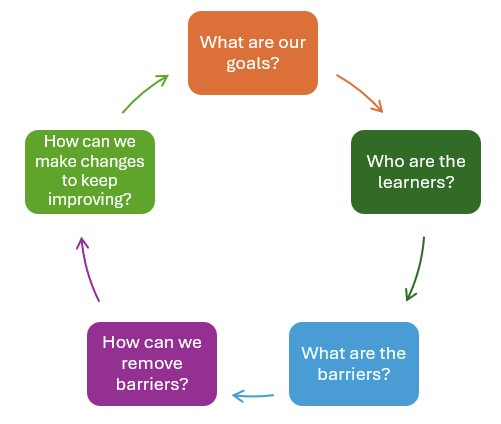
This model represents an ongoing cycle for inclusive design:
- What are our goals?
- Who are the learners?
- What are the barriers?
- Who can remove barriers?
- How can we make changes to keep improving?
These steps are intentionally cyclical, emphasizing continuous reflection and improvement.
For a deeper dive into each step of the cycle, take the Universal Design for Learning (UDL) Unpacked course on the Employee Learning Hub. Note that you will have to login using your BCIT credentials first.