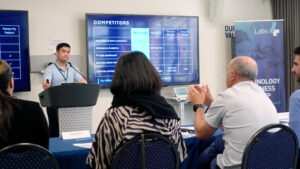
BCIT students pitched projects ranging from tested prototypes to market-ready ventures at the 2026 Student Innovation Challenge Pitch Round, a fast-paced, intense, Dragon’s Den-style challenge finale held at the Burnaby campus. The event brought together students, faculty, and industry partners, creating a dynamic environment where ideas were challenged and assessed in real time.
Across the board, this year’s submissions presented well beyond early-stage ideas. They ranged from clinically tested prototypes to ventures with defined markets and across both categories, students demonstrated a sophisticated understanding of their users, the problems they are solving, and how their solutions could be applied and brought to market.
“What stood out this year is how far along many of these projects are,” said Dr. Justin Williams, AVP Academic. “Students aren’t presenting early ideas; they’re presenting prototypes and well-developed plans that are nearing real-world application. That’s a reflection of the strength of BCIT’s applied, hands-on approach to education.”
The annual BCIT Student Innovation Challenge invites students to submit their bright ideas in two streams, Applied Research and Entrepreneurship. After a competitive review of more than 50 submissions from across all BCIT schools, six finalists advanced to the live pitch round where they presented and responded to questions from judges acrosss industry and BCIT leadership.
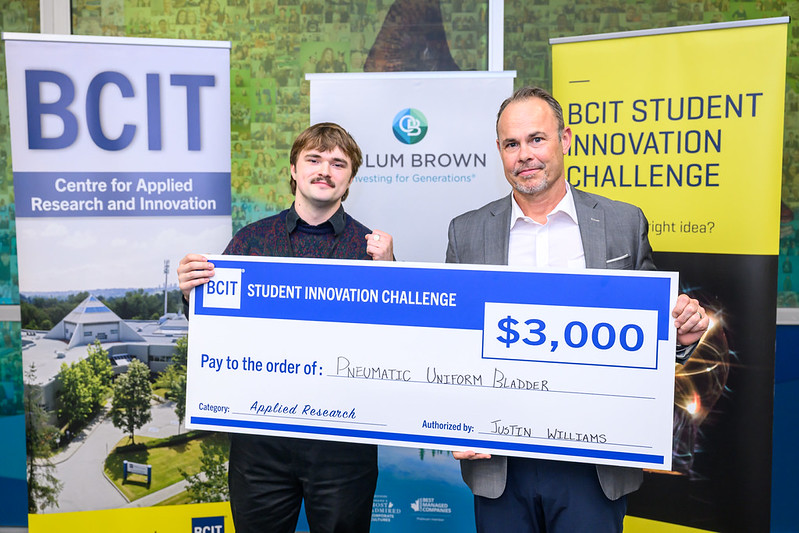
 In the Applied Research category, top honours went to Pneumatic Uniform Bladder, a project focused on improving prosthetic socket fit for amputees. This is the second year in a row the team has competed and won, with significant progress made since last year. Over the past year, the team has moved from early concept work into prototype testing, developing a 3D-printed inflatable inner socket. Using a custom-built system, they tested multiple designs over thousands of cycles to assess performance under repeated use.
“Last year, we were still working through the concept,” said Ryan Dorssers, a member of the team. “This year, we’ve been able to build, test, and refine the design, which gives us a much clearer path toward how this could be used in a clinical setting.”
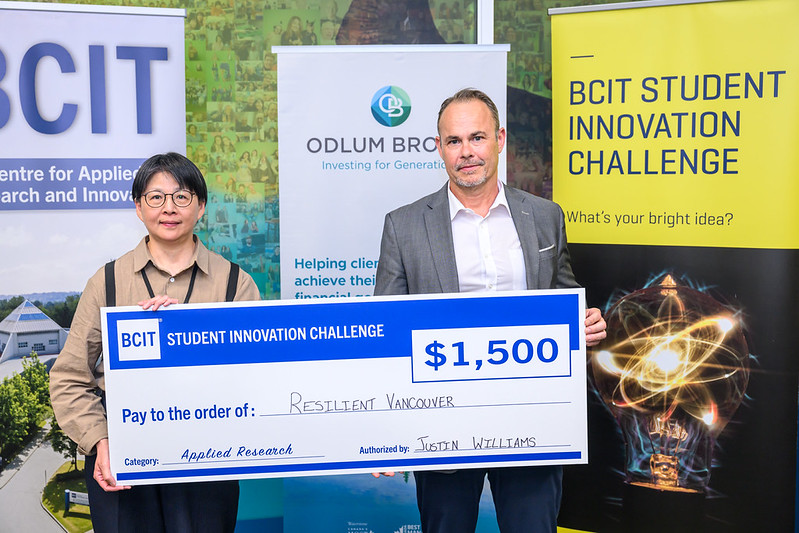
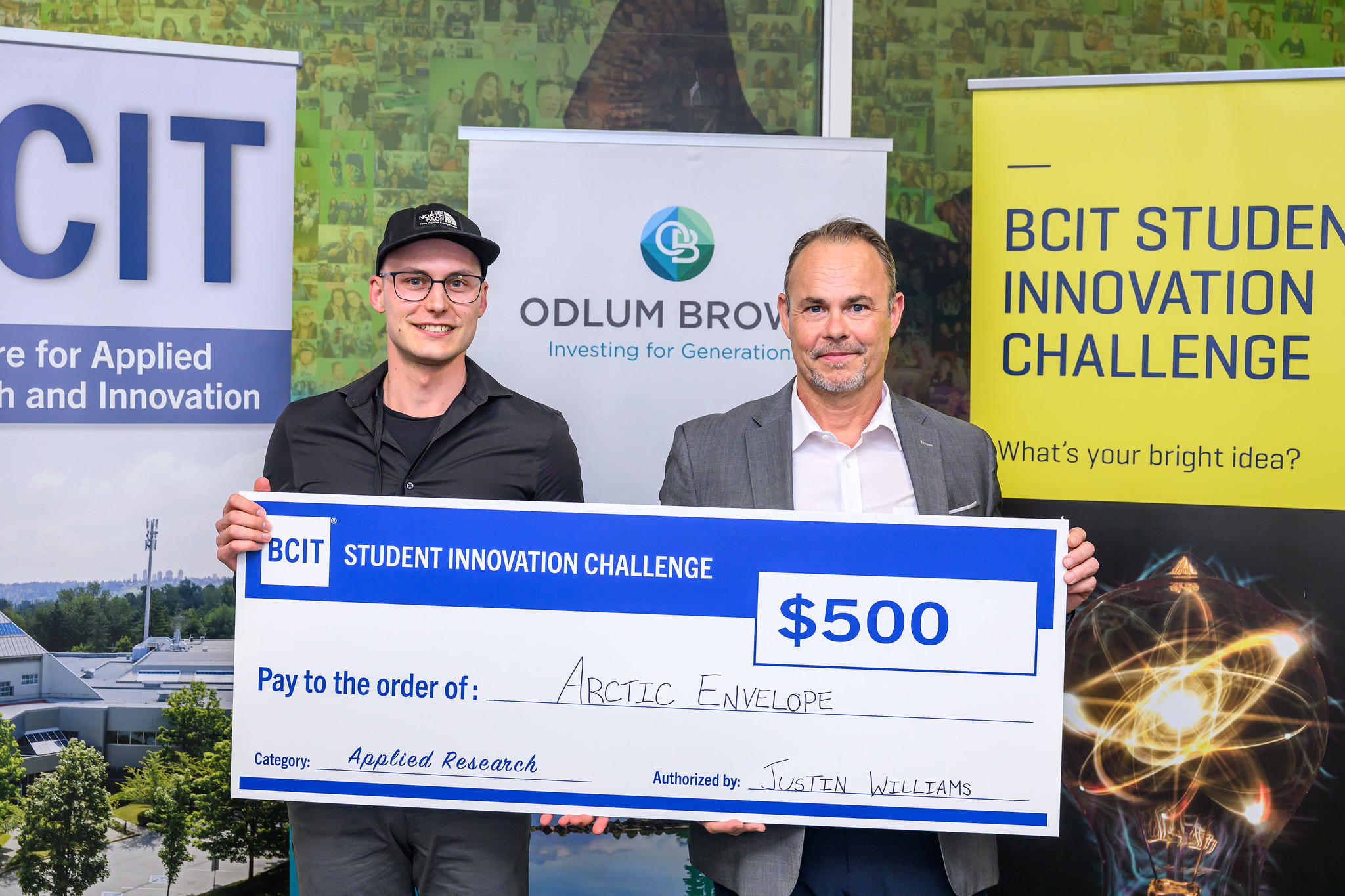
Second place in Applied Research was awarded to Resilient Vancouver, with Arctic Envelope placing third.
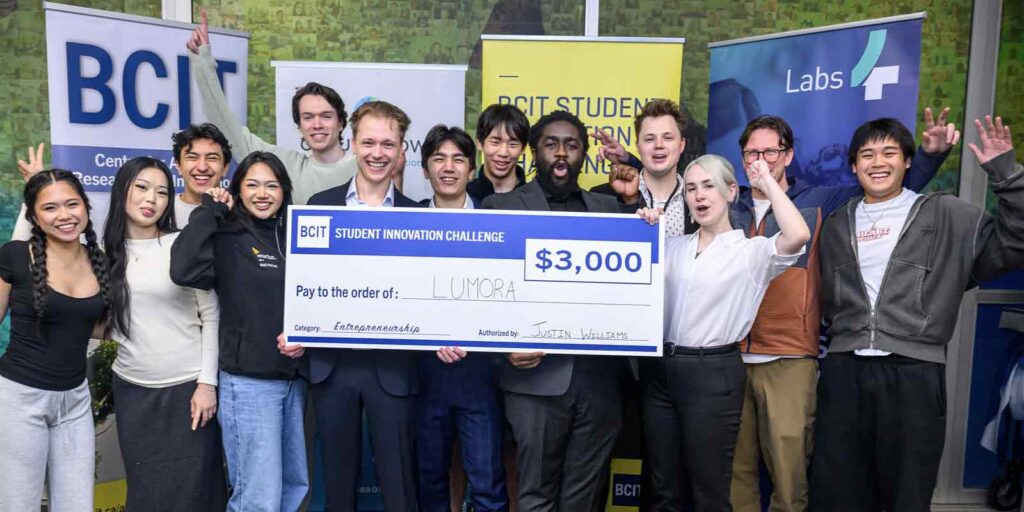
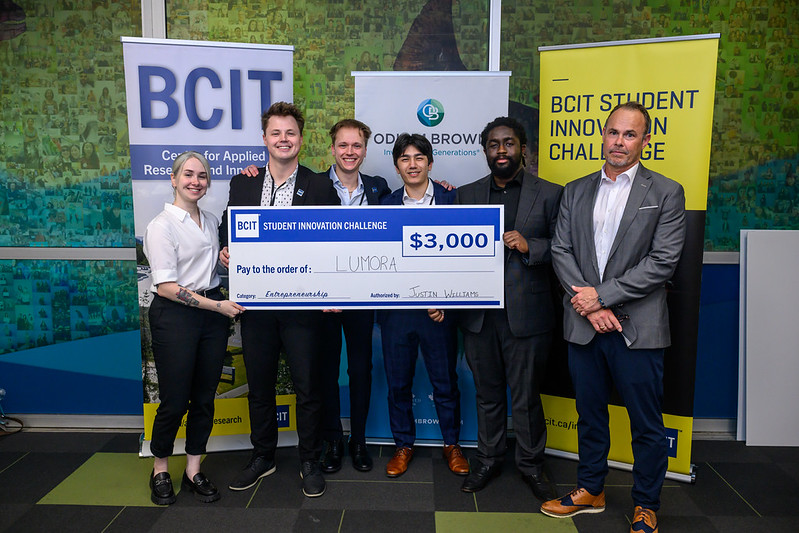
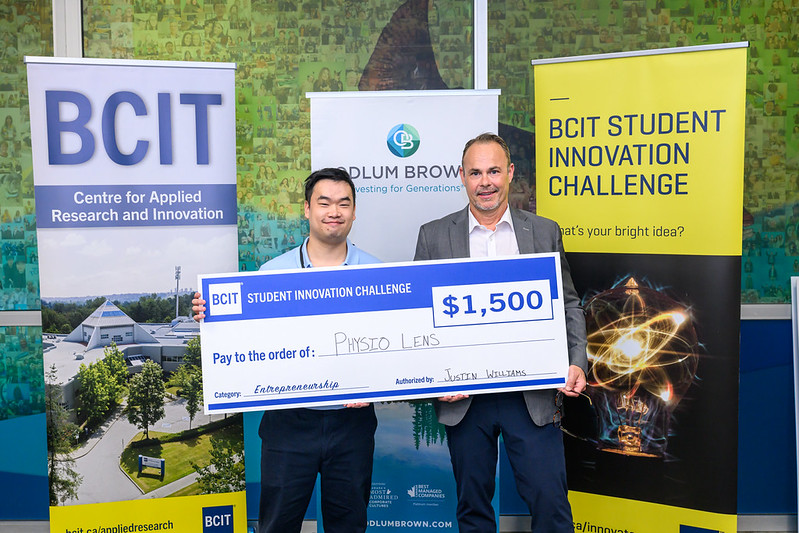
In the Entrepreneurship category, Lumora took first place with a compostable fibre made from surplus milk protein, designed to replace plastic baling twine and break down safely in soil after use. PhysioLens placed second, followed by SmartPost in third. Teams in this category demonstrated a strong understanding of user needs, business models, and pathways to implementation.
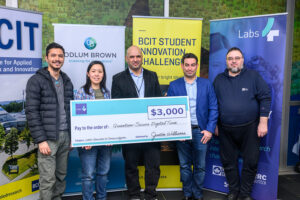
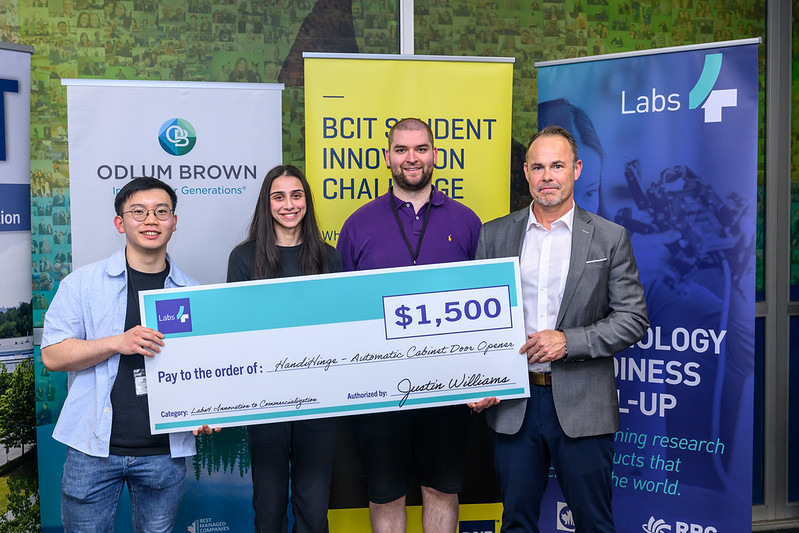
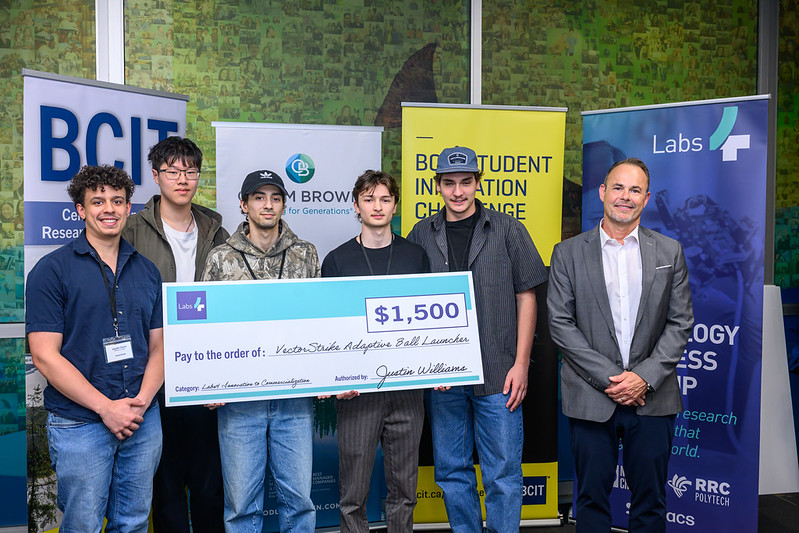
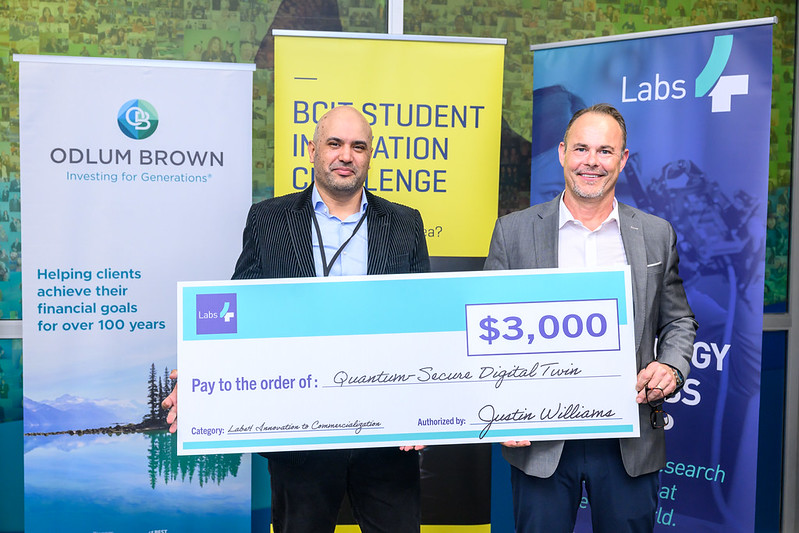
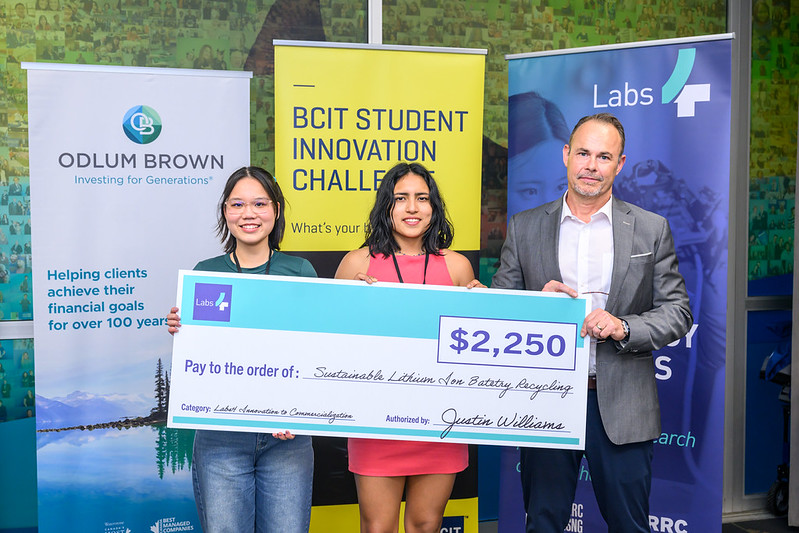
Top Labs4 honours were awarded to Quantum-Secure Digital Twin for Critical Microgrid Infrastructure, a project focused on protecting energy systems from emerging cybersecurity threats, alongside Sustainable Lithium-Ion Battery Recycling, The Flashbang Destroyer, HandiHinge, and VectorStrike Adaptive Ball Launcher.
“The Labs4 awards are about what comes next,” says Max Cimenti, Labs4 Project Leader. “They recognize the potential for these projects to move beyond the lab to market and making real-world impact.”
The Challenge is supported by industry and community partners who serve as judges and mentors, helping students refine their ideas through real-world insight. Judges noted the high level of preparation across all finalists, with students demonstrating confidence, adaptability, and the ability to engage in thoughtful, detailed discussion.
“The level of clarity and depth this year was impressive,” said Nigel Halsted, Business Development Lead at MAKE+. “Students were able to respond to detailed questions and think through how their ideas would actually work in practice.”
The Student Innovation Challenge continues to highlight BCIT’s applied approach to learning where students don’t just develop ideas, they test, validate, and advance them toward real-world impact.
Applied Research
- 1st Place – $3,000
Pneumatic Uniform Bladder
Student: Ryan Dorssers
School/Program: School of Health Sciences – Prosthetics and Orthotics - 2nd Place – $1,500
Resilient Vancouver
Student: Pearl Koo
School/Program: School of Construction & the Environment – Advanced Diploma in GIS (FLEX) - 3rd Place – $500
The Arctic Envelope
Student: David Penny
School/Program: School of Construction & the Environment – Master of Engineering, Building Science
Entrepreneurship
- 1st Place – $3,000
Lumora
Students: Eminence Selikem, Ethan Dyk, Tyre Blue, Adam Fortin
Schools: School of Energy – Electrical & Computer Engineering Technology and School of Business + Media - 2nd Place – $1,500
PhysioLens
Student: Christopher Chong
School/Program: School of Computing & Academic Studies – Master of Science in Applied Computing - 3rd Place – $500
SmartPost
Students: Glen Healy, Mikhail Rego, Ethan Bosiak, Pawel Banasik
School/Program: School of Energy – Bachelor of Engineering in Electrical Engineering

Labs4 Innovation to Commercialization Awards
- 1st Place – $3,000 Quantum‑Secure Digital Twin for Critical Microgrid Infrastructure
Student: Mohamed Hammami
School/Program: School of Energy – Master of Engineering in Smart Grid Systems and Technologies - 2nd Place – $2,250
Sustainable Lithium‑Ion Battery Recycling
Students: Sofia Ormeno Burgos, Phuong Nguyen
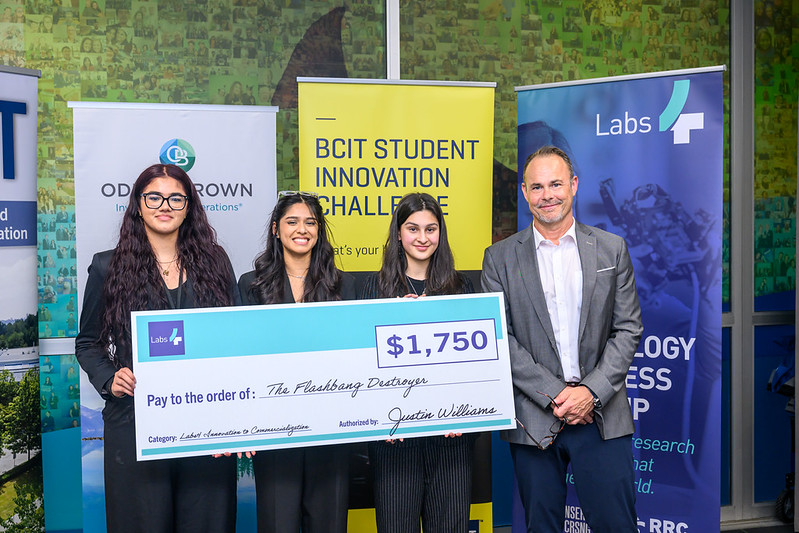
School/Program: School of Energy – Chemical & Environmental Technology - 3rd Place – $1750 The Flashbang Destroyer
Students: Anshnoor Ahluwalia, Eisha Mumtaz, Anshi Khatri
School/Program: School of Energy – Mechanical Engineering - 4th Place – $1500 HandiHinge
Students: Katie Dowdall, Rachel Petruk, Scott Palmer, Nathan Lai
School/Program: School of Health Sciences – Biomedical Engineering Technology - 5th Place – $1500 VectorStrike Adaptive Ball Launcher
Students: Egor Gevorkyan, Nicholas Aron, Jayden Bayer, Soha Benham, Brian Choo
School/Program: School of Energy – Mechanical Engineering
Thank you!
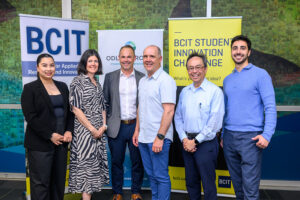
Thank you to our sponsors and Pitch Round judges, including Tess Eriksson (JTS Consulting Inc), Jennifer Le (Odlum Brown), Fred Yazdani (Futurpreneur), and to judges Kenton Low (Dean, School of Business + Media) and Nigel Halsted (Business Development Lead, MAKE+ applied research group), for sharing their insights and expertise on the panel. And finally, a big shout-out to our first round judges Fardin Barekat, Thom Bellaire, Max Cimenti, Anika Singh, Mahsa Khalili, Alan Stewart, Moein Manbachi, Jennifer Talman, Mary Ho, Terry Yau, Bryan Grazziano, Tayfun Aydin, Michal Aibin, Nigel Halsted, and Cynthia van Ginkel. These folks sorted through a mountain of submissions this year! The Student Innovation Challenge continues to inspire BCIT students to think creatively, solve problems, and build solutions that make a difference. We can’t wait to see where their ideas will lead next.
Interested in developing your innovation or learning more about the Student Innovation Challenge?
Connect with the Applied Research Liaison Office for guidance, resources, and support.