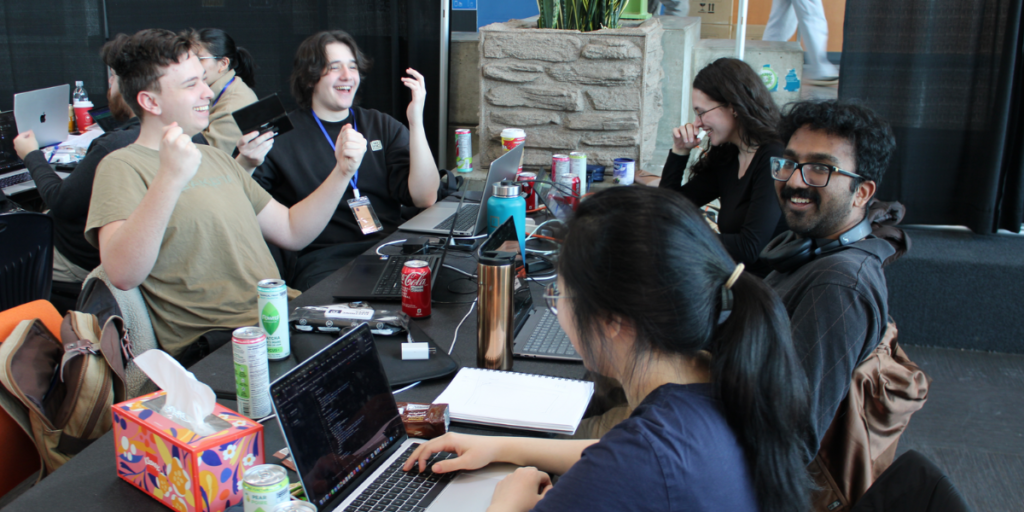
Students from several programs – including Computer Information Technology (CIT), Computer Systems Technology (CST), and the Bachelor of Science in Applied Computer Science (BScACS), as well as students from Engineering – teamed up at the BCIT Burnaby campus from March 13 to 15 for Hack the Break, the BCIT Computing Club’s flagship hackathon. The event also served as a reunion of sorts, with many BCIT alumni returning as volunteers, staff, and judges to support and give back to the next generation of tech professionals.
“The whole experience was amazing! You go from zero to a working project in almost no time, and somewhere along the way, you realize you’ve picked up skills that would’ve taken weeks to learn otherwise.” – Carlos Fonseca, part of the team that won Best Beginner Hack, CST, term 1
This year’s challenge for the 150 students was to build a full application within 40 hours around the theme of Developer Tool. Arman Chinai, Vice President of the BCIT Computing Club, explains that the theme was intentionally designed to push students beyond typical hackathon ideas.
“We anticipate that throughout a student’s educational journey, they will participate in multiple hackathons, and projects can start to look very similar,” he says. “We want our hackers to come away with a diverse range of work that showcases their full skill set. The developer tool theme created a unique opportunity for students to build something they can use themselves, while also showing their passion for coding and the industry.”
“‘I have an idea. Dunno if it’s possible,’ was the first thing I said to my team after the theme was revealed. I think that perfectly encapsulates the mentality you should have going into a hackathon. Even after the numerous different projects each of us has built over the last three years at BCIT, there is still so much more to learn and experiment with in this field.” – Kevin Nguyen, part of the team that won Best Overall, BScACS Term 2
A key requirement at this year’s event was that all projects had to be deployed, making them publicly accessible to end users. “Deployment isn’t something you often see at hackathons, since many applications only run locally due to the short development window,” says Arman. “But it’s an invaluable industry skill, and it’s important for students to gain exposure to it early. It also allows them to share their work once it’s complete.”
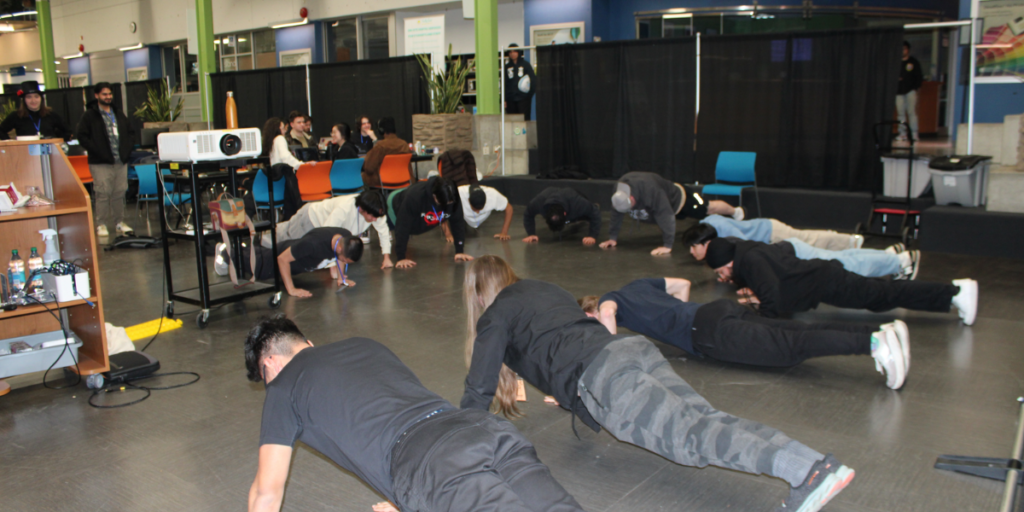
Between hacking sessions, participants engaged in prize-winning mini-challenges such as the fastest-deployed website, a typing test, a push-up competition, and a LeetCode (a platform that provides coding and algorithmic problems) competition, along with plenty – read: infinite – of snacks and drinks to keep the momentum going. What was also unique was that many participants spent the night on campus to fully experience the hackathon.
“Nothing is as much fun as fixing bugs at dawn on the day of the deadline. It was a great way to practice the skills we learned during our first semester.” – Halie Favron, part of the team that won Best Beginner Hack, CST, term 1
The event concluded with a live demo and judging round, during which the strongest projects were showcased and recognized for their technical execution and creativity. Ultimately, there were five winners across the categories: Best Overall, Runner-up, Best Solo Hack, Best Terminal App, and Best Beginner Hack, who shared a $3,000 prize pool.
Best Overall: QuickStyle

The Best Overall award went to the team behind QuickStyle, a project that stood out for its technical execution, creativity, and real-world applicability.
Designed to let developers edit the content and styling of a React application directly within a live browser view – while automatically updating the underlying code – QuickStyle helps streamline and speed up front-end development.
“Events like Hack The Break give us an opportunity to act on our curiosity, really dip our toes into anything we find interesting, and as a result, quickly bring to life an idea.” – Taylor Ockerman, part of the team that won Best Overall, BScACS Term 2, Game Development
Best Beginner Hack: C-MAHV
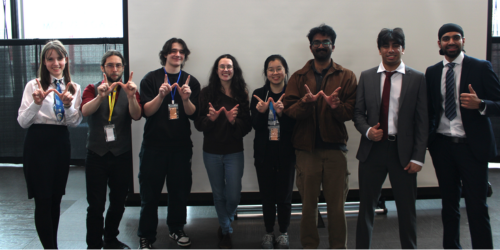
In the Best Beginner Hack category – reserved for Term 1 students – the team behind C-MAHV took first place.
Their project, a tool that helps developers better understand and review code, particularly impressed the judges for demonstrating “initiative, creativity, and a willingness to learn new tools and technologies on the fly”.
“It was challenging having to learn new concepts and tools under a time constraint, but coming up with solutions to problems we faced was very educational for all of us, and now we have a working website to show for our efforts!” – Megan Chow, part of the team that won Best Beginner Hack, CST, term 1
“It was both incredibly fun and extremely challenging, especially learning that plain HTML, CSS, and JavaScript are incredibly hard to deploy without tools such as Docker. But overall, the Hack the Break hackathon was a great experience, and winning was a huge surprise as it was our first-ever hackathon.” – Vish Epa & Adam Olszewski, part of the team that won Best Beginner Hack, CST, term 1
Reflecting on the students’ accomplishments, Arman says: “This event was especially meaningful because it felt like a full-circle moment for me. When I first started at BCIT, hackathons were a huge part of my growth. They helped me accelerate my skills and led to my first co-op through the projects I built.”
“Events like Hack the Break play an important role in helping students build confidence, expand their technical toolkit, and connect with peers in the computing community. By working on real projects under real constraints, students gain experience that translates directly into industry-ready skills.”