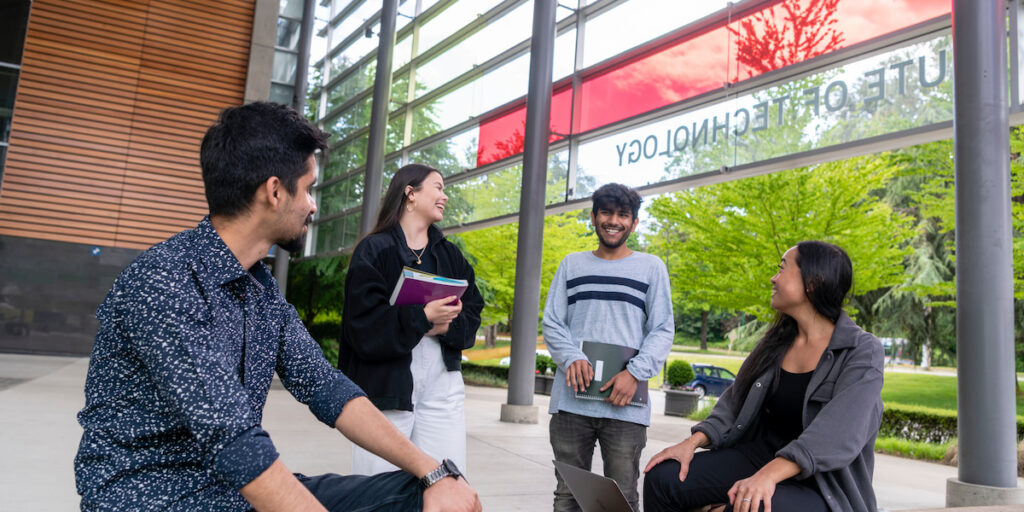
With a global population of 1.8 billion, youth aged 10 to 24 make up the largest generation in history. The youth population is also more aware than ever of the dangers of climate change, as well as the need for climate action solutions. In recognizing the important role of youth in championing a sustainable future, Dr. Jennie Moore, Director of BCIT Institute Sustainability, was invited by the UN-Habitat Youth Advisory Board, to lead a consultation discussion in Istanbul, Türkiye, that focused on the practical skills and resources needed to help youth build capacity and become leaders in tackling the climate crisis.
The conversation began with an introduction to the BCIT Climate Changemakers Youth Leadership Training program that focuses on connecting and supporting youth in sustainability leadership around the world. The program is offered as a one-to-five day training and has also been expanded into a four-credit, microcredential for climate changemakers at any age.
Throughout the discussion with members of the UN-Habitat Youth Advisory Board that comprise representatives from Europe, Africa, Latin America, and Asia, key themes and takeaways included:
Essential skills for young leaders
Research, data analysis, and critical thinking are essential skills for young people navigating complex climate information, especially amid rising misinformation in the age of artificial intelligence (AI). The discussion also emphasized the importance of creativity, collaboration, communication, and financial and political literacy to drive meaningful sustainability action. Additionally, there is also a need for more youth engagement in policymaking and for climate leadership education to include Indigenous and community-based knowledge.
Supporting young leaders through education
In recognizing that not all youth have access to formal schooling or advanced digital tools, there is a growing need for educational programs to be accessible, inclusive, flexible, and self-directed. Examples include low-barrier and locally connected opportunities that recognize diverse learning experiences, such as those acquired through microcredentials, peer-learning, community work, or informal learning.
There was also consensus that microcredentials and skills verification must extend beyond universities and into regional and national frameworks to ensure broader access and legitimacy. As well, climate education should be multilingual and culturally responsive to reflect Indigenous and diverse worldviews.
Building capacity for sustainability transitions
On the capacity building front, it is valuable to engage early in climate education in schools and facilitate ongoing learning through technology such as apps, social media, and hackathons. Sustainability literacy should be embedded across both formal curricula and community-based learning networks, supported by regional partnerships and peer recognition.
From discussion to action
The discussion concluded that empowering young leaders requires accessible, culturally relevant, and multilingual education, reinforced by skills verification and continuous learning opportunities. Digital tools play a key role in enabling peer learning and practical engagement, while early integration of sustainability into both formal and community-based education systems further supports long-term action.
The insights from the discussion will be shared with the host convenors of the Zero Waste Forum and UN Habitat.
A career that contributes to a better future
As one of BC’s largest post-secondary institutes with five campuses and over 44,000 students enrolled each year, a holistic and practical approach to sustainability guides how BCIT fosters a supportive environment for everyone to thrive.
In efforts to help more communities transform to sustainable living, the BCIT Centre for Ecocities has worked with over 30 municipalities across BC in measuring their consumption-based carbon and ecological footprints. Similarly, the BCIT Zero Energy/Emissions Buildings Learning Centre (ZEBLC) provides education and training to the construction industry across BC helping local governments reduce greenhouse gas emissions through net-zero energy-ready buildings. Sustainability is woven throughout BCIT programs and applied research projects to empower students, faculty, and researchers in pursuing purpose-driven careers that make a tangible difference in communities across BC and beyond.
Discover BCIT programs that contribute to a purposeful career and a better future.