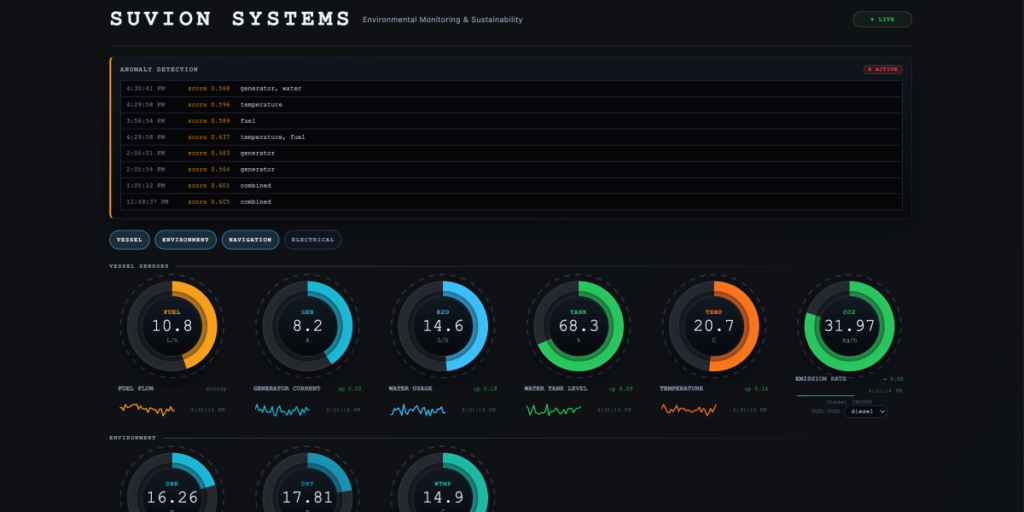
Bachelor of Science in Applied Computer Science (BScACS) degree graduate Alina Pak’s prototype turns simulated vessel data into real-time environmental insights, automated emissions calculations, and practical sustainability reports.
For crews on small yachts, tracking fuel use, generator hours, water consumption, and other operational data can mean hours of manual spreadsheet work. The process is time-consuming and vulnerable to gaps and errors. And delays can make it harder to spot excessive generator use, water leaks, or other inefficiencies before they affect a vessel’s environmental performance.
“After a few years of working in the industry, I wanted to strengthen my computer science fundamentals and go deeper into security, which is becoming more important in everything we build. The BScACS program let me build on my diploma and keep working while I studied, so I could apply what I was learning right away.” – Alina Pak
From spreadsheets to real-time insight
For her capstone project, Alina Pak developed Suvion Systems, a web-based environmental monitoring and sustainability dashboard designed for small-vessel operators. Alina’s prototype brings multiple streams of information – including fuel, water, energy, and waste – into a single dashboard so crews can view operating conditions as they change.
Using sensor data, the system is designed to calculate carbon dioxide emissions and generate downloadable fuel-consumption and sustainability reports.
“I focused on making environmental data easier to collect, understand, and use,” explains Alina.
Built to be accessible and testable
“A simulation-first approach – using the dashboard without actually installing equipment on a boat – let me test data ingestion, dashboard updates, calculation accuracy, and report generation while keeping the project achievable within my academic term,” says Alina.
“I also used an open-source technology stack, which helps avoid the licensing costs associated with some commercial vessel-monitoring systems.” The compact design is intended to run on an onboard computer or in the cloud, as suited to smaller operators.
Apply now for the Bachelor of Science in Applied Computer Science (BScACS) January full-time intake, or study part time towards a degree in Flexible Learning
Connecting software experience with maritime sustainability
Alina brought experience developing scalable full-stack applications, AI-powered tools, fintech software, and digital health platforms to the capstone. Recent work on a maritime intelligence platform also gave her relevant experience with real-time data, automation, and predictive vessel management.
For Suvion Systems, she applied those skills across the full development cycle: designing data flows and schemas, building the dashboard and back-end services, creating emissions calculations, and planning unit and integration testing. The result demonstrates how a focused software prototype can translate raw operational data into information that vessel crews can act on.
A foundation for future innovation
The capstone deliberately keeps its first release focused on building a working prototype. Alina emphasizes that future iterations should include user authentication, anomaly detection, automated alerts, and regulatory checks. It could also be adapted for other kinds of transportation, such as aviation.
“The Network Security Applications Development Option taught me to think about security and data integrity from the start, not as something added at the end, and that shaped how I designed the data flows and back end for Suvion Systems,” shares Alina.
“The program also gave me a stronger foundation in software design and testing, which helped me plan the project so it could be tested properly and finished within the term.”
Even within its defined scope, Suvion Systems shows the potential of open-source software to help smaller vessel operators move beyond manual records.
“By making operational and sustainability data more visible, this is a practical starting point for earlier intervention, better-informed decisions, and more efficient environmental reporting,” says Alina.
“I’m optimistic about the ways in which computing can improve tracking and performance across sectors,” she concludes. “It’s an exciting time to be in this line of work.”
Sign up for our quarterly Tech It Out and keep up with the latest from BCIT Computing.
Note: Microsoft copilot assisted in summarizing a capstone report, which was reviewed and edited by author and subject matter expert