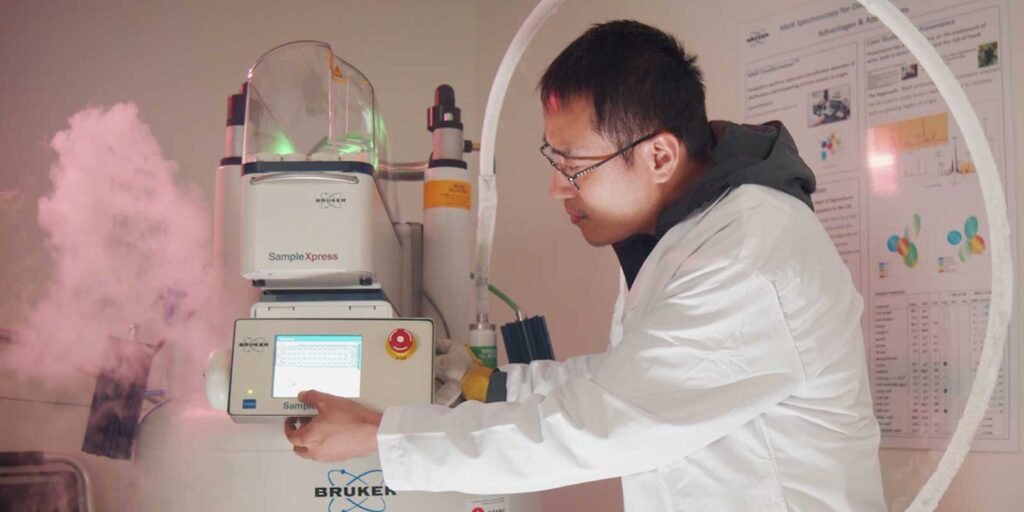
With several research presentations and a leadership role on the organizing committee, BCIT applied research played an instrumental role at Fifth Scientific Kratom Symposium hosted by the University of Florida College of Pharmacy at the University of Florida Research and Academic Center. The symposium is an international gathering of over 200 participants focused on emerging research into the plant Mitragyna speciosa, commonly known as kratom.
Kratom is a deciduous tree in the coffee family that has a long history of traditional use in Southeast Asia, where its leaves are chewed or prepared as teas to support energy, focus, and relief of minor discomfort associated with physical exertion. Kratom has received a lot of attention recently, but further research is necessary to understand the benefits, uses, and risks. Last year Dr. Paula Brown, Director of BCIT Natural Health and Food Products Research Group and her team were instrumental in sounding the alarm on synthetic products masquerading as kratom and the danger they pose to public health. These products are widely available for sale in the US and online. In Canada, kratom is classified as a natural health product, but no products have been approved by Health Canada, though Canadians can import products for personal use.
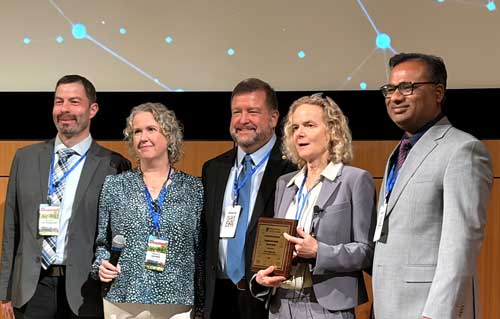
As one of the symposium’s organizers, Dr. Brown helped shape the program alongside international leaders in pharmacognosy, toxicology, and public health. The program highlighted emerging research and is helping inform scientific and regulatory discussions around kratom. The event featured keynote remarks from Dr. Nora Volkow, Director of the U.S. National Institute on Drug Abuse (NIDA), who highlighted the growing global attention on kratom research and regulation.
Informing international conversations
Kratom is a popular and useful medicinal plant that is used by consumers globally. By contributing data spanning real-world evidence, clinical research, and advanced chemical analysis, BCIT researchers are helping inform international conversations around safety, efficacy, and responsible regulation. “Policy should be informed by scientific evidence, not fear-based assumptions,” says Dr. Brown. “Consumers rely on and, frankly, deserve transparency and robust safety standards to make informed decisions about their wellness. Our hope is that our research will help guide policy decisions that acknowledge the potential benefits of kratom while prioritizing consumer safety.”
NRG’s participation in the Symposium exemplifies the group’s ever-expanding role in evidence-based natural health product research and highlights their collaborative work with academic and industry partners including the Network for Applied Pharmacognosy, the University of Victoria, industry researchers, and legal and regulatory experts on a global industry problem.
Studies presented by BCIT researchers and collaborators
BCIT researchers and collaborators presented a variety of studies highlighting the breadth of NRG’s kratom research, from chemical analysis and clinical safety to real-world product use.
- What’s being sold as kratom?
Building on research published earlier this year by BCIT, Dr. Ryland Giebelhaus (University of Victoria) presented a metabolomic comparison of authentic kratom leaves with synthetic products falsely marketed as kratom. - How well are kratom extracts tolerated?
Dr. Jenelle Patterson (Gowlings WLG) and Dr. Brown shared preliminary findings from a clinical study evaluating the safety and tolerability of kratom extract formulations during a 28-day period of daily use. Sponsored by BCIT’s industry partners, key findings from the double-blind, randomized, placebo-controlled study include no observed severe adverse events and no evidence of dependence or withdrawal for 4 weeks of consecutive daily use. - How is kratom being used in the real-world?
BCIT researchers also presented two studies that examined the real-world use of kratom formulations. These studies, undertaken in collaboration with the Network for Applied Pharmacognosy, represents real-world product use data and demonstrates how traditional use knowledge can inform the development of effective modern products. - What can we learn from real-world observational studies?
NRG researcher Dr. Michael Chan presented an analysis of observational data showing the dose-dependent focus and energy effects of a Kratom formulation designed to mimic a traditional preparation. Adjunct BCIT faculty, Dr. Paloma Lehfeldt, presented observational research on a botanical formulation combining kratom and kava.
“Centralized clinical trials can be cost-prohibitive and are not always the best representation of how people actually use self-care products” says NRG Project leader Dr. Michael Chan. “By evaluating real-world observational data we can gain insight into how consumers actually use products.”
Collectively, these presentations position BCIT NRG as a key contributor to the global conversation on kratom, advancing research that will inform consumers, industry, and regulators.
About NRG
BCIT Natural Health and Food Products Research Group (NRG) addresses issues of product quality, process improvement, and human health using basic and applied science along with state-of-the-art technology. The goal of NRG is to ensure that all Canadians can achieve the potential health and economic benefits offered by medicinal plants, natural health products and the food industry.