
Long before rewilding became a global movement, Dr. Mark Angelo was already thinking about restoration.
As a child exploring creeks and rivers, he developed a fascination with moving water and a growing awareness of environmental damage. From the concrete channels of the Los Angeles River to polluted outlets along California’s coast, Mark saw firsthand how human activity could transform ecosystems. He also began asking a different question: what would it take to bring them back?
That question would later shape his career as an instructor and program head in the Fish and Wildlife program at British Columbia Institute of Technology (BCIT), and ultimately inform his latest documentary, The Rewilders, of which he is a cast member and Executive Producer.
Applied learning in action
When Mark joined BCIT, he was drawn to its hands-on, real-world approach.
“One of the reasons I was so excited to come to BCIT was because of its applied focus,” he recalls. “From an environmental perspective, there’s nothing more applied than taking an area that’s been damaged and working to restore it.”
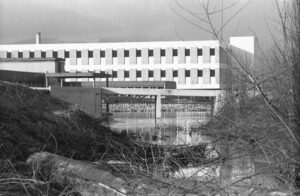
That opportunity presented itself almost immediately. On his first day on campus, Mark walked to Guichon Creek which runs through BCIT’s Burnaby campus. He found it polluted and lifeless. It was stripped of vegetation, filled with debris, and devoid of aquatic life.
By chance, he encountered a longtime resident, and their conversation changed his perspective. The man described a time when the creek teemed with salmon and trout, and when eagles and otters were common sights.
Mark saw possibility.
Working alongside students, staff, and community members, he helped launch one of BCIT’s earliest restoration efforts. Guichon Creek became a living classroom where students didn’t just study ecosystems, but actively rebuilt one.
“That’s as applied as it gets,” Mark says. “You’re not just talking about restoration in a classroom. You’re elbows deep in it.”
Protecting and restoring
The restoration of Guichon Creek reflected a philosophy that continues to define Mark’s work which comes with the understanding that rivers, forests, and wildlife are interdependent and that a change in one, will affect the others.
Early in his career, Mark encountered debate within environmental circles: should limited resources focus solely on protecting pristine ecosystems, or on restoring those already degraded?
His answer was simple — both.
That integrated mindset is central to The Rewilders, which profiles conservationists across Patagonia, South Africa, Montana, and British Columbia. The film highlights efforts to restore keystone species such as jaguars, bison, and salmon, and rebuild interconnected ecosystems.
Rewilding, Mark explains, means restoring landscapes to their historic, natural state which can also include reintroducing species that once played critical ecological roles. But it also means understanding how entire systems function together.
“In the heart of the Fraser, we’re protecting what remains intact, but we’re also restoring and rewilding areas that have been impacted,” Mark adds. “It has to go hand in hand.”
That dual approach aligns with the United Nations’ “30 by 30” initiative to protect 30 per cent of the planet’s land and water by 2030. For Mark, achieving that goal will require more than preservation. It will also require bold restoration.
Partnerships that matter
A defining theme in The Rewilders is the leadership of Indigenous communities.
In British Columbia, Mark works closely with First Nations partners, including the Skwah First Nation and others, in advancing rewilding initiatives in the Fraser Valley. These collaborations reflect a shared commitment to stewardship and long-term sustainability.
“Developing strong partnerships with Indigenous communities is essential,” Mark says. “For anyone envisioning a career in natural resources, that’s key.”
Recognition with reach
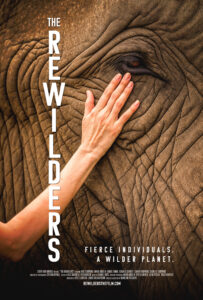
The Rewilders is currently in the midst of a global festival run, earning nominations for Best Editing, Best Documentary Short, and Best Film at the Oceanside Film Festival. Selected from more than 300 films submitted from 50 countries, the documentary has also been honoured with the prestigious Green Fire Award for Best Film at the American Conservation Film Festival which is a tribute to a story by renowned author and conservatist Aldo Leopold.
The recognition helps amplify the message.
“The main goal of the film is to inspire more rewilding,” he states. “When people see what can be done, and the benefits that come from it, it opens doors to new conversations.”
The film also featured in a global telecast for the Greater Rewilding Alliance on Global Rewilding Day on March 20, reaching organizations and policymakers worldwide.
For Mark, the international attention is gratifying particularly because the production is a Canadian effort.
“I’m proud that this Canadian team is having a global impact,” he says.
Beyond the classroom
While The Rewilders spans continents, its roots are unmistakably local.

Guichon Creek stands today as a testament to what applied education can achieve. The restored waterway now supports salmon, trout, songbirds, and countless other species. Hundreds of students and staff walk its paths daily, experiencing firsthand the environmental, recreational, and wellness benefits of restoration.
Mark describes rewilding as “synonymous with hope.”
“It highlights the fact that nature can heal itself, if we give it a chance.”
For current and prospective BCIT students, that message is clear: education does not end at the classroom door. At BCIT, learning is immersive, practical, and purpose-driven. It equips students not only to understand complex systems, but to improve them.
Reflecting on his years at BCIT, Mark speaks most passionately about his students, many of whom have gone on to lead meaningful environmental careers.
“That’s one of the great rewards of teaching,” he expresses. “Seeing students take what they’ve learned and apply it in the real world.”
In that sense, The Rewilders is more than a documentary. It is an extension of BCIT’s mission in demonstrating how applied learning, systems thinking, and community partnership can create impact far beyond campus boundaries.