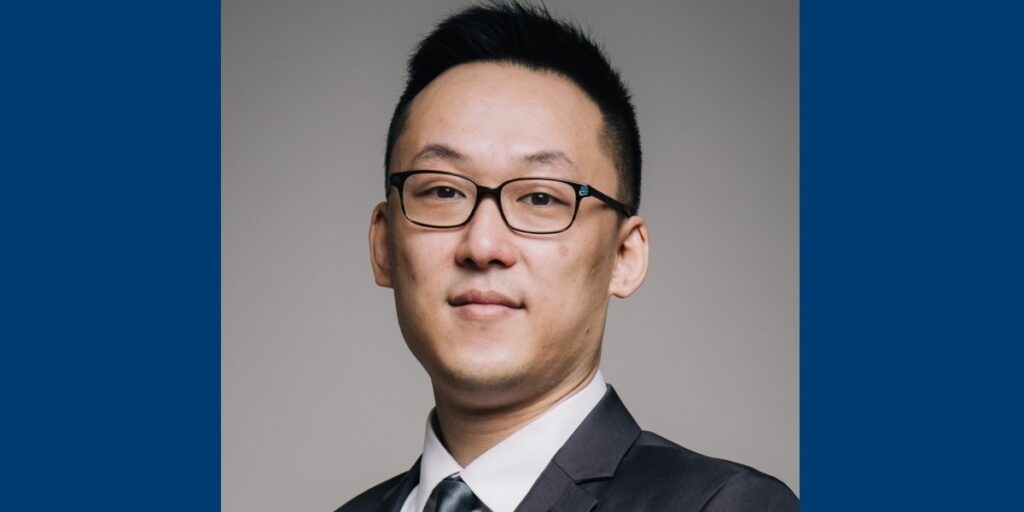
As artificial intelligence transforms classrooms and workplaces, BCIT Computing faculty Dr. Marco Ho is exploring how AI can support student success in education. His work recently received national recognition through a Social Sciences and Humanities Research Council of Canada (SSHRC) Insight Development Grant.
“Our research addresses how AI can contribute to educational success and equitable student outcomes,” explains Marco. “We’ve developed AI learning supports with features like emotion awareness and behavioural tracking to create a more ideal computer science learning environment that is responsive to each student’s uniqueness.”
Marco points out that as technology is constantly evolving, education must evolve with it. “We believe that we can integrate emerging technologies with evidence-based educational practices to make learning engaging, relevant, and future-focused,” says Marco who teaches in the two-year Computer Systems Technology (CST) Diploma Program where he is also the Digital Processing Option Head.
Building an AI study companion
Early grant support from BCIT enabled Marco to present a paper at EDUCON 2025 in London, England, titled Evaluating the Impact of Assistive AI Tools on Learning Outcomes and Ethical Considerations in Programming Education. The work tested how AI might assist students in best reviewing material before a quiz. The research has also had cross-cultural sampling, and geographical reach, involving students from BCIT, Mount Saint Vincent University in Nova Scotia, and Taiwan.
Marco’s recent SSHRC Insight Development Grant enables him to further his work. “I believe this is the first time BCIT has been awarded a SSHRC grant, so I’m very thrilled,” he reports. He is also a research collaborator for a SSHRC Insight Grant led by colleague Dr. Pin-Chuan Lin of Mount Saint Vincent University on Tracing Self-Regulated Learning in Computer Science Education with an AI-Enhanced Learning Tool.
The goal is a responsive AI ‘study buddy’ that can recognize signs of frustration, confusion, or engagement and provide personalized support to help students stay motivated.
“Our tool aims to coach students individually, building perseverance, effectiveness, and academic resilience,” says Marco. If successful, the work will lead to improvements that can help students when they encounter challenges, particularly students who are struggling.
Preparing future technology professionals
Student use of AI goes well beyond coaching and support, and Marco advises that we must be realistic about appropriate use, as well as build guardrails.
“AI will be part of our graduates’ workplaces,” says Marco. “Students need to know how to work with it, but also how to critically evaluate its output.”
He emphasizes that teaching is not only about imparting technical knowledge, but also about cultivating critical thinking, creativity, ethical foundations, and adaptability.
“We’re hearing a lot these days about negative impacts of AI in education, and there definitely are areas of concern,” says Marco. “But we also see the potential for significant positive impacts on student learning with the right tools at the right time, helping students become competent professionals who can thrive in a dynamic industry where human expertise and AI increasingly work side by side.”
“That’s why this work is exciting.”
Sign up for our quarterly Tech It Out and keep up with the latest from BCIT Computing.