The British Columbia Institute of Technology (BCIT) is advancing marine training and innovation with a $1.03 million investment from the Province of British Columbia. The funding, spread over two years (2025-2026), enables BCIT to modernize technology while expanding access to training for learners and mariners in remote communities across the province.
A safe and hands-on learning environment
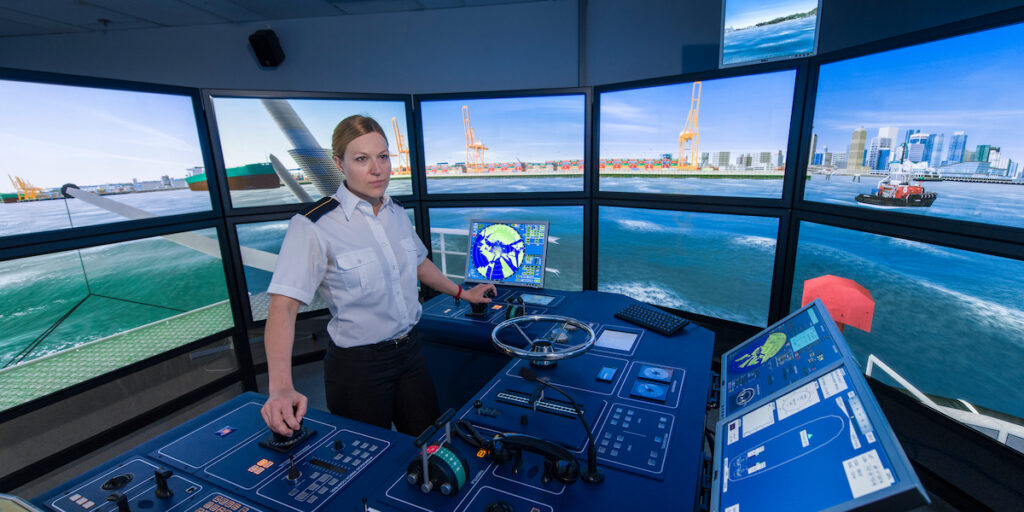
With $830,000 of the total funding, BCIT is bringing two new Kongsberg simulators to the BCIT Marine Campus in North Vancouver, BC. These advanced digital training systems provide Nautical Sciences and Bridge Watch students with a safe and immersive learning environment that mimics the real-world conditions mariners encounter at sea.
“As part of our Government’s Look West economic strategy, we’re investing in the people and skills needed to support key sectors of BC’s economy, including the maritime industry,” said Jessie Sunner, Minister of Post-Secondary Education and Future Skills. “This funding will help BCIT expand access to training, modernize learning environments and ensure students have the hands-on experience needed to succeed in high-demand marine careers.”
“Our Look West strategy is about creating good jobs and real opportunities for people in every corner of British Columbia, and a skilled marine workforce is central to that,” said Ravi Kahlon, Minister of Jobs and Economic Growth. “With more than $88 billion in major projects moving forward, training people for in-demand careers is one of our top Look West priorities. This investment in BCIT will strengthen marine training, expand access in coastal and remote communities, and help more people prepare for rewarding careers in one of BC’s most important industries.”
Beyond enhancing students’ hands-on learning, the cutting-edge training tools give the marine industry better access to upskill their workers in-line with evolving standards and technologies.
Improving pathways to training and the workforce
In efforts to improve access to training and entry into the marine workforce, BCIT is using the remaining $200,000 to develop mobile marine training that brings simulator-based training to northern, coastal, and remote communities across BC. The faculty will have the latest simulators and digital systems capable of delivering a variety of marine courses and programs.
This initiative brings job-ready training directly to communities with growing marine demand, such as Kitimat and Prince Rupert. Learners are able to build the skills they need close to home, while encouraging workforce participation and strengthening local talent.
“The investment from the Province of British Columbia allows BCIT to expand its workforce mandate and bring hands-on training directly to northern and remote communities across BC,” said Dr. Jeff Zabudsky, President, BCIT. “By providing learners with training close to home, it encourages workforce participation and builds a strong pool of local talent to support the growing marine sector.”
Supporting people and communities in a growing marine industry
BC’s maritime sector is the largest in Canada, contributing roughly $4.0 billion in economic output and supporting over 34,000 jobs. The industry is critical to the province’s economy – connecting coastal communities and providing key infrastructure such as ports, shipyards, and other maritime facilities.
As the largest trades training provider in BC, BCIT continues to deliver hands-on training that helps learners build meaningful careers, support communities, and meet the growing workforce demands of the marine sector.
Quick facts:
- The BCIT Marine Campus is the only Transport Canada Recognized Institution (RI) to deliver nautical and marine engineering cadet programs on the West Coast.
- BCIT offers a fully-funded Enhanced Bridge Watch Rating program to support and increase women and Indigenous Peoples’ participation in the sector. Over 230 Indigenous and women have graduated from the program since 2019. Many graduates are working on the HaiSea Marine, where they are using fully electric tugboats to support escort towing services to LNG Canada’s new export facility in Kitimat.