
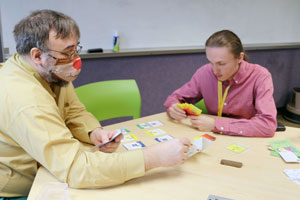
With more than 40 years of experience in software development, Alan Stewart brings deep technical expertise to BCIT’s Smart Microgrid Applied Research Team (SMART). Alan’s work focuses on building and integrating systems that support energy management, data visualization, and the evolving needs of modern power grids. He also created the SMART Microgrid card game designed to make complex energy systems easier to understand.
What is your role with SMART?
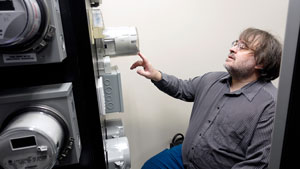
I have been a Research Analyst with SMART for nearly 18 years, though it does not feel that long! I am primarily a programmer, focused on collecting data from internet connected devices, storing it in databases, and visualizing it through web-based platforms. I also manage the ITS virtual machines that support our research servers and serve as one of the team’s tech representatives supporting FSA members. I wear a few different hats.
What inspired you to pursue a career in applied research?
Applied research has allowed me to continuously use and expand my skills along the way. Working across different SMART projects means constantly adapting and learning new tools, programming languages, and techniques. That ongoing learning and challenge has been the most rewarding part of my work.
What kinds of projects does SMART work on?
SMART focuses on smart microgrid technologies, essentially adding “smarts” to the electrical grid. We measure what is happening locally, respond to it, and optimize how electricity is generated and distributed. Much of our work involves renewable energy sources like solar, wind, and battery storage, as well as reducing carbon emissions and supporting EV adoption. Education is a key part of what we do, helping people understand how the grid works and how small changes can improve energy use.
What is a recent project you’re proud of?
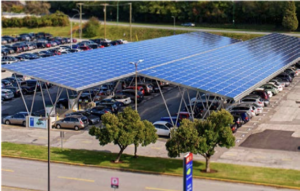
The Energy OASIS project stands out as one of our largest and most impactful. Over more than 10 years, our team contributed to building a system at BCIT’s Burnaby campus that connected solar panels in Lot 7 to battery storage and EV chargers. This allowed electric vehicles to be charged using solar energy generated on site. By the end, we had 10 Level 2 chargers in near constant use. While the project has since concluded, it demonstrated the real-world potential of integrated renewable energy systems.
Applied research is about solving real-world challenges. What challenge are you tackling right now?
We are working on projects focused on education. One aim, through the Charging Forward project, is to address misconceptions about EVs, particularly in northern and remote communities, showing that they can be viable transportation option with proper planning. Another focuses on cybersecurity awareness, helping people understand the risks involved as more devices and systems become connected, and how simple actions can improve safety.
What excites you most about the future?
The potential for what people can learn and create. When I started, programming involved teletype machines and punch tape. Today, people carry incredibly powerful computers in their pockets. With AI tools making development more accessible, almost anyone can build technology that once seemed impossible. That is exciting, and I hope SMART continues to support and inspire that innovation.
What advice would you give to someone who wants to get involved in applied research?
Study something that genuinely interests you. Take time to explore what local post-secondary institutions including BCIT have to offer. Come for a visit, see what we do, and decide what is the right fit for you. Stay curious, keep learning, and get hands on experience whenever you can. There is something out there for everyone, so keep exploring and have fun.
Are you Interested in building smart energy systems and working with data? Start with a B.Eng. in Electrical Engineering.
About SMART
The BCIT Smart Microgrid Applied Research Team (SMART) converges expertise in information technology, communications engineering, and energy management to develop advanced prototypes and solutions for complex applied research programs. At the forefront of its initiatives, SMART is advancing Digital Twin technologies for critical energy infrastructure, enabling real-time analysis, resilience testing, and intelligent decision-making. In parallel, the team leads R&D in OT cybersecurity, energy storage systems, and virtual power plant integration, addressing the evolving challenges of modern energy networks. Through strong collaborations with academia, industry, utilities, and government, SMART continues to strengthen BC’s innovation ecosystem and contribute to Canada’s energy transition