BCIT School of Energy has been recognized as a recipient of the Wawanesa Climate Champions: Youth Innovation Grant for the second consecutive year, underscoring the institute’s leadership in applied research, student‑driven innovation, and climate action.
The Wawanesa Climate Champions: Youth Innovation Grant provides funding to support youth-led climate solutions across Canada. Delivered through Canadian Colleges for a Resilient Recovery (C2R2), the Wawanesa Climate Champions program was offered nationally for only three years. BCIT was selected in two of the final three years, distinguishing the institute among post‑secondary institutions across Canada for its sustained commitment to youth‑led, climate‑focused applied research with real‑world impact.
Launching the new project: Green hydrogen from wastewater
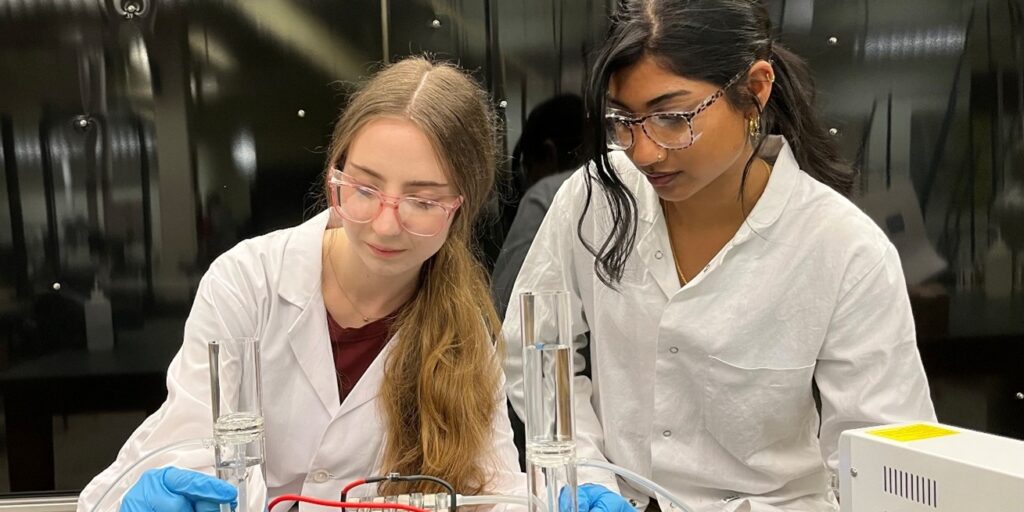
Building on recent success in climate‑focused applied research, BCIT School of Energy is launching a new project titled Green Hydrogen Production from Industrial Wastewater, supported by the Wawanesa Climate Champions: Youth Innovation Grant.
Supervised by Dr. Ali Al Jibouri, faculty in the Chemical and Environmental Engineering Technology program, the project will be led by student researchers from the School of Energy. It will investigate how pulp and paper wastewater can be transformed from an industrial liability into a resource for low‑carbon hydrogen production.
Using a bench‑scale integrated system, the project combines ozonation to improve water quality with electrolysis to generate hydrogen. Beyond laboratory research, students will lead hands‑on workshops and educational outreach, sharing knowledge with industry and the broader community while advancing practical climate solutions.
Advancing circular solutions for battery recycling
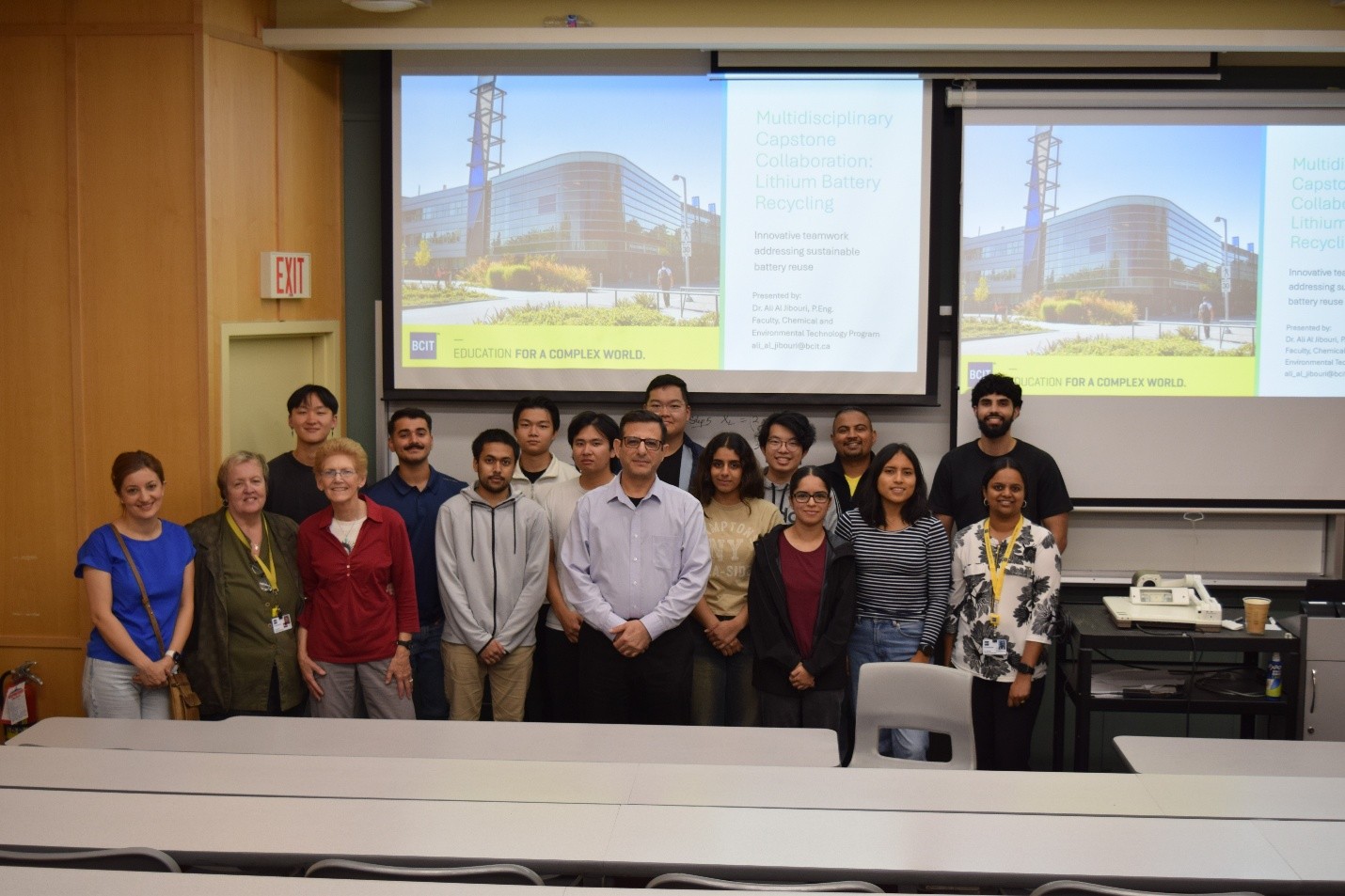
Last year, the 2025 Wawanesa Climate Champions award also supported the project Supercritical CO₂ Techniques for Lithium‑Ion Battery Metal Recovery, a youth‑led applied research initiative also supervised by Dr. Al Jibouri.
The project addressed the environmental challenges associated with end‑of‑life lithium‑ion batteries by designing and operating a pilot‑scale recycling system that uses supercritical carbon dioxide (scCO₂) as a clean extraction medium. Compared to conventional recycling methods, this approach significantly reduces chemical use and environmental harm while supporting circular‑economy principles and domestic recovery of critical battery materials.
Students from the Chemical and Environmental Engineering Technology program led laboratory experimentation, process validation, and chemical process design. Students from Mechanical and Electrical Engineering programs within the School of Energy contributed to industrial‑scale system design, including equipment layout, materials selection, and process integration—closely mirroring professional engineering practice.
To further evaluate environmental performance, Environmental Engineering students from the BCIT School of Construction and the Environment conducted a Life Cycle Assessment (LCA) examining greenhouse gas emissions, resource use, and overall environmental impact. This work informed decision‑making for scale‑up and commercialization.
Together, this multidisciplinary collaboration advanced the technology-to-Technology Readiness Level (TRL) 5, establishing a strong, industry‑relevant foundation. Building on these results, the project is now progressing toward TRL 9 commercialization in partnership with Remarkable First Nations Regenerative Industries (RFNRI), an Indigenous‑owned organization supporting reconciliation through clean‑technology development and Indigenous participation in Canada’s circular economy.
Student‑led research with real‑world impact
Across both projects, students play a central role in research planning, laboratory testing, engineering design, environmental assessment, and knowledge mobilization. By earning the Wawanesa Climate Champions award in consecutive years, BCIT continues to demonstrate how multidisciplinary, applied education can deliver meaningful climate solutions while preparing students to contribute directly to Canada’s clean‑energy future.