Acknowledgements

This mock-up was commissioned by the Township of Langley and developed in collaboration with the BCIT ZEB Learning Centre. We gratefully acknowledge the Township of Langley team for their guidance and support throughout the project, and the BCIT ZEB Learning Centre for designing and constructing the mock-up.
The construction details shown in this mock-up are informed by NRCan’s LEEP program and the Net Zero Energy Wall Guides, which provide practical guidance for high-performance, energy-efficient building assemblies.
Can a Wall Have Two Air Barriers?
Yes. A wall can have more than one air barrier. While one continuous and well-installed air barrier is usually sufficient, two air barriers is not a building-science concern as long as each layer is detailed and continuous
Can a Wall Have Two Vapor Barriers?
No. Two vapor barriers should be avoided. A wall assembly must be able to dry in at least one direction, either toward the exterior, toward the interior, or both. A double vapor barrier can trap moisture within the assembly by limiting drying potential, increasing the risk of condensation, mold, and durability problems.
Air Barrier Approaches Shown in This Mock-Up
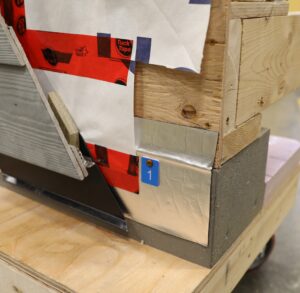
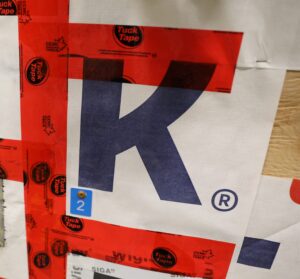
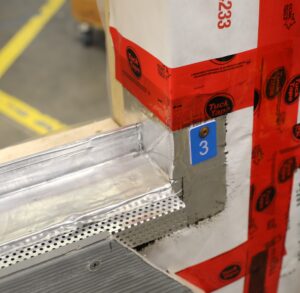
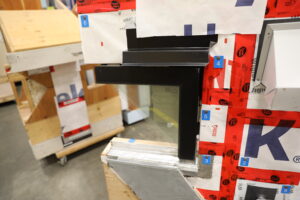
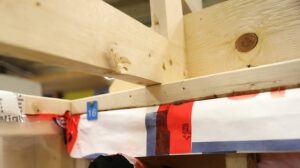
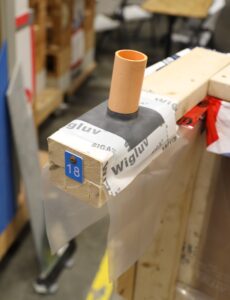
This mock-up shows examples of both interior and exterior air-barrier approaches. The intent is not to suggest that both are required. A project may use an interior approach, an exterior approach, or both together. The key is maintaining continuity and good detailing.

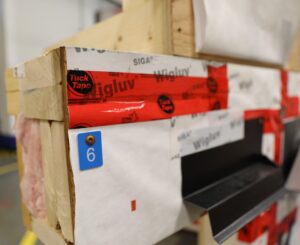


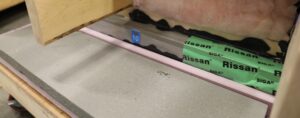


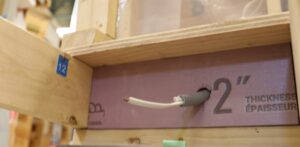

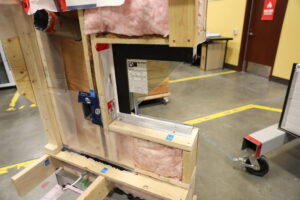


Township of Langley Mock-Up Poster
Download the Township of Langley educational mock-up poster as a PDF for easy viewing, printing, or sharing.
Additional Learning Resources
To learn more about the LEEP wall details that informed this mock-up, visit BCIT’s free LEEP Walls video resources. These videos provide practical guidance on high-performance wall assemblies, air-barrier strategies, and energy-efficient construction details.