BCIT has secured the largest Mitacs funding commitment in the institution’s history: $1.3 million in multi-year research funding focused on intelligent disaster management systems.

Master of Science in Applied Computing Program Head Dr. Michal Aibin tells us how organizations can get involved in having a BCIT intern work with them under the new “umbrella” funding model.
“We’re excited to be contributing to Canada’s innovation ecosystem in this critical area, and helping build resilience through industry collaboration.” – Dr. Michal Aibin
Q: How does the Mitacs umbrella funding help BCIT students and partner organizations?
Dr. Michal Aibin (MA): Mitacs’ mission is to drive innovation through partnerships, and it allocates federal and provincial funding to support that goal.
This historic achievement gives pre-approval for up to 50% salary support grants for 90 internships, related to a wide range of projects that integrate AI in disaster prevention and infrastructure management. This streamlines the approval process, making it simpler and faster for organizations to bring on skilled interns.
Q: What kind of internships are a fit for this new funding?
MA: Our approach recognizes that modern disaster preparedness requires not just detection and response, but also resilient digital infrastructure, secure communications, and cloud-based coordination platforms.
Examples of research areas include:
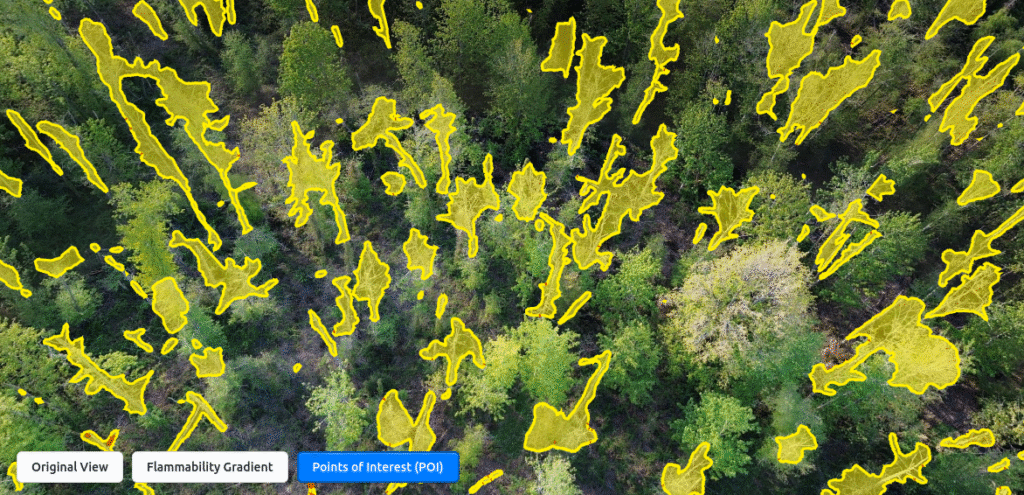
- Wildfire detection and prevention using UAV-mounted AI
- Computer vision for environmental monitoring and threat assessment
- Cloud infrastructure and edge computing for emergency response systems
- Cybersecurity for critical infrastructure and IoT sensor networks
- AIoT (Artificial Intelligence of Things) applications for real-time sensing
- Predictive risk modeling and early warning systems
- Developer tools and platforms for emergency coordination
- Climate adaptation and infrastructure resilience planning
- Post-disaster damage assessment and recovery optimization
Our MSc in Applied Computing graduate students bring advanced technical expertise in AI/ML, computer vision, deep learning, and software engineering. Intern roles span AI/ML engineering, cybersecurity, GIS analysis, cloud infrastructure, IoT systems, and more – matched to your project needs.
Meet Michal and learn more at the upcoming #VTJLive: Building a Resilient BC: Technology’s Role in Protecting People, Infrastructure & the Economy
Q: What types of organizations are eligible?
MA: The program is open to incorporated Canadian companies, including small businesses (minimum 2 employees) and non-profits. American companies with a Canadian subsidiary are also eligible. Sole proprietors and unincorporated startups are not eligible at this time.
Q: What about Indigenous organizations?
MA: Indigenous organizations are strongly encouraged to participate, and receive an enhanced 75% salary match, making this an excellent opportunity to build technical capacity while advancing disaster resilience in Indigenous communities.
Q: Which industries are a good fit?
MA: Companies in cloud platforms, cybersecurity, developer tools, geospatial tech, drones, environmental monitoring, emergency services, smart cities, and climate tech are particularly well-positioned to participate. While this funding is anchored in our MSc in Applied Computing program, we can also connect partners with talented students from other BCIT Computing programs, depending on project needs.
Q: What about insurance and payroll requirements?
MA: There’s no need for a CRA payroll account, liability insurance, or WCB coverage to host a student—interns are covered under BCIT’s student insurance.
Q: When can businesses hire these interns?
MA: MSc in Applied Computing interns will typically start internships in May and run for 4 to 8 months. Internships can be on-site, hybrid, or fully remote, depending on project requirements and organizational preference.
Of course, if internships go well, companies often want to hire students for longer-term roles or in the future.
We’re excited to be contributing to Canada’s innovation ecosystem in this critical area, and helping build resilience through industry collaboration.
Q: How do companies get involved?
MA: Please visit our web page for more information. Organizations interested in hosting interns should reach out to discuss project alignment and funding details.
Sign up for our quarterly Tech It Out and keep up with the latest from BCIT Computing.