Technological change often arrives before people are ready for it.
We are seeing that now with generative AI. Adoption is widespread, but critical evaluation has not always kept pace. While new tools are often described as transformative, the way individuals engage with AI tools varies widely. Some adopt quickly. Some proceed cautiously. Others choose not to use them at all.
Everett M. Rogers’ Diffusion of Innovations theory describes how technologies spread through groups over time, from innovators and early adopters to the early majority, late majority, and laggards. It helps explain adoption patterns, but it does not fully capture the thinking behind those choices.
In education, those categories are useful, but incomplete. They describe when people adopt a new technology. They do not fully describe how people think about adoption.
A critical approach to technology adoption
The distinction between adopting a new tool and critically thinking about adoption is important.
- Uncritical adoption accepts a new tool before understanding its limits.
- Skeptical adoption tests a new tool before trusting it.
- Outright refusal rejects a new tool before the test begins.
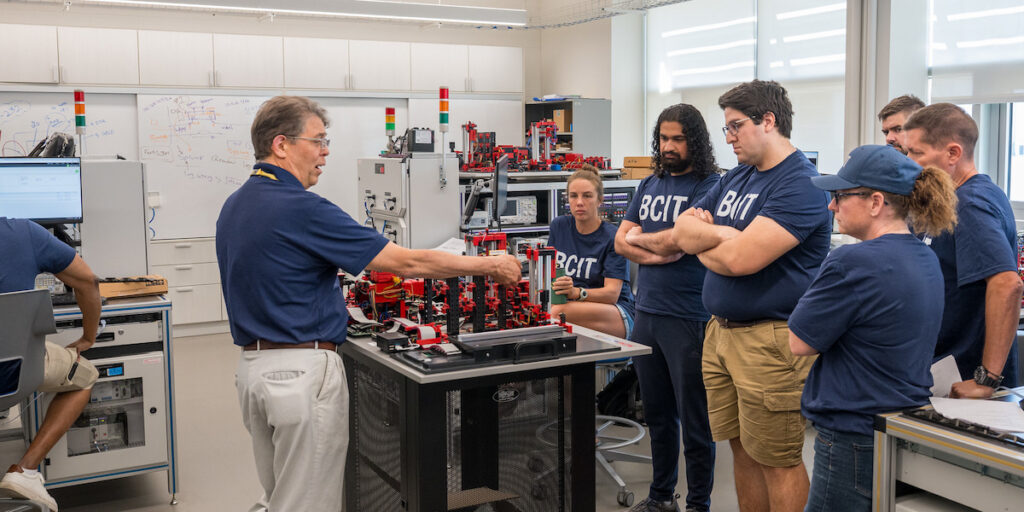
In applied learning environments like BCIT, this distinction matters. Students regularly encounter new software, systems, and technologies. But being comfortable with change does not mean every new tool should be trusted immediately or used uncritically. Some tools are overpromised. Some are poorly understood. Some solve one problem while creating several others.
Learning to critically evaluate new technologies is just as important as learning to use them.
What is skepticism?
Skepticism is not resistance but a form of inquiry. It is necessary in technology adoption as it keeps evaluation active and grounded in evidence.
You may ask:
- What does this tool do well?
- Where does it fail?
- What assumptions does it make?
- Who is accountable for its output?
- How can its results be verified?
Refusal is different. It decides the answer before the evidence is examined – closing off exploration before these questions are asked.
Understanding skepticism is especially important as AI becomes more integrated into education and the workplace.
AI tools can support learning, productivity, and creativity but they can also result in incorrect, biased, or incomplete outputs. Understanding both their strengths and limitations is essential to responsible and ethical use of AI tools.
More importantly, understanding healthy skepticism will help students learn to respond critically when technological tools evolve again.
And the tools will change.
BCIT is not preparing students for a workplace where technology remains fixed. We are preparing them for workplaces where software, automation, data systems, and artificial intelligence will continue to change. The useful graduate does not accept every new tool uncritically. The useful graduate is the person who can test a tool, understand its limits, recognize its risks, and remain open enough to learn from it.
And BCIT graduates are useful in exactly that way.
Get the in-demand skills to safeguard industrial, manufacturing, and critical infrastructure networks from cyberthreats. Learn more about the BCIT Industrial Network Cybersecurity program.
This article is written by Roger Gale, Faculty, BCIT Industrial Network Cybersecurity program. Roger brings over 30 years of teaching experience in Computer and Communications Technology, with a focus on their application in business. He specializes in industrial network cybersecurity, applying security and cybersecurity principles to protect critical industrial systems. Roger’s excellence in teaching has been recognized by the Cisco Networking Academy.