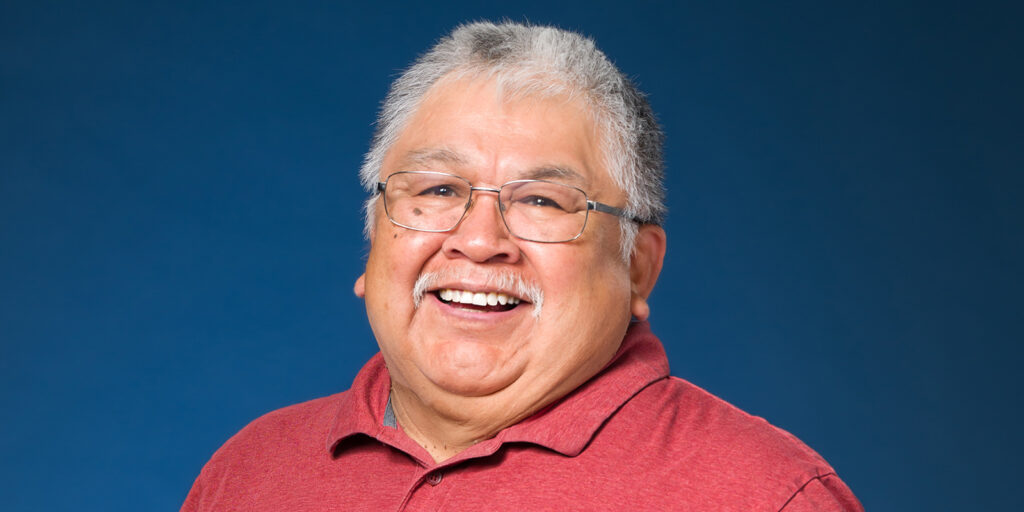
For Jordon Gabriel, the forest has never simply been a workplace. It is home, classroom, pantry, pharmacy, and legacy.
As Manager of Forestry Operations for the Lil’wat Forestry Ventures LP, Jordon oversees approximately 800,000 acres of traditional territory, but his work extends far beyond harvesting timber. Every decision begins with a different question, “How will this benefit the land and the people for generations to come?”
Finding a new path
Jordon’s journey to BCIT wasn’t a straight line.
Growing up in the Lil’wat Nation, life revolved around the land. Fishing, hunting, gathering berries and mushrooms, and learning from Elders were part of everyday life. He left high school early to support his young family and found work in forestry, eventually becoming a crew leader with BC Wildfire Service.
Originally, he had planned to become a backcountry mountain guide, but a serious vehicle accident ended those ambitions.
Instead, another opportunity appeared.
When BCIT brought its Forest Resources Technician program directly to the Lil’wat community, Jordon decided to return to school in his thirties. More than 150 people applied. About 100 started the program, but only eight completed it and Jordon was one of them.
“The education gave me the skills that I still use today,” he says.
Those technical skills became the foundation for something much bigger.
Bringing two ways of knowing together
After two decades fighting wildfires, Jordon returned to work for his Nation, where he saw an opportunity to rethink how forests could be managed.
For years, he had watched outside organizations work throughout Lil’wat territory while cultural values often remained an afterthought.
“We started asking ourselves, “Why are we letting others manage our territory without managing for everything?’”
The answer was to combine two ways of knowing.
Using the technical training he received at BCIT alongside generations of Indigenous knowledge passed down by Elders, Jordon helped transform forestry management in Lil’wat territory.
Today, before a harvest begins, community members are invited to gather cedar bark for regalia, collect medicines, or harvest culturally significant plants before any trees are removed.
The forest is managed not just for timber, but for wildlife, food systems, medicines, cultural practices, wildfire resilience, and future generations.
“It really helped to have both the technical education and the cultural knowledge,” Jordon says. “Putting them together is what makes it work.”
Bringing fire back to the forest
One of Jordon’s proudest accomplishments has been reintroducing cultural burning to the landscape.
For generations, fire was an important tool for caring for the land. Carefully planned burns could clear excess vegetation, reduce fuel that can feed wildfires, improve habitat, and encourage the growth of plants and berries important to the community.
But those practices, like many other aspects of Indigenous culture, were restricted by government policy. First Nations were prevented from freely practicing cultural traditions, and cultural burning was effectively pushed out of the landscape.
Jordon recognized that restoring cultural burning would require more than simply reintroducing fire. It would require understanding what had been lost and what could be learned from the past.
His work in the field evolved into long-term monitoring and research of the forests throughout the Lil’wat territory. He spent time with Elders, learning from their understanding of fire and the land, while also reviewing historical records that documented Lil’wat fire knowledge throughout the twentieth century.
Jordon combined these teachings with his knowledge and experience from over two decades with the BC Wildfire Service and his education from BCIT. He has also collaborated with many invited researchers from universities around the world, sharing his knowledge of Lil’wat territory while learning from ongoing field research. Together, these efforts have created a growing body of knowledge that weaves together Elder teachings, historical records, field observations, technical forestry expertise, wildfire science, and contemporary research.
This work laid the foundation for navigating government approvals when Lil’wat Forestry Ventures conducted its first cultural burn five years ago.
For Jordon, the return of fire to the landscape was about far more than wildfire management. It represented the restoration of Indigenous knowledge and an important way of caring for the land that had been practiced for generations.
Today, cultural burns are carried out annually and are becoming an important model for wildfire management across British Columbia.
“We’re managers of the forest now,” he says. “We’re not a logging company. We’re managing for everything.”
The work has drawn attention from researchers, governments, forestry professionals, and Indigenous communities across Canada who want to learn from Lil’wat’s approach.
Teaching the next generation
Although Jordon manages forests, much of his time is spent teaching.
Each year he mentors students from BCIT, UBC, and other post-secondary institutions, taking them into the field to understand how forestry can balance environmental stewardship with Indigenous knowledge.
He also works closely with local youth, introducing them to careers in natural resource management and showing them that education can create opportunities close to home.
“I tell students that if you’re passionate about looking after the environment, follow that passion.”
For Jordon, sharing knowledge is as important as gaining it.
Whether speaking with university researchers, community members, government officials, or young people considering their futures, his goal is always the same: to help others see forests differently.
Not simply as resources to extract, but as living ecosystems that sustain entire communities.
A vision for the future
Today, Lil’wat Forestry Ventures manages approximately 75 per cent of the Nation’s territory, allowing decisions to be guided by both science and cultural values.
It’s a model Jordon believes will continue to grow as more communities look for sustainable ways to manage forests while reducing wildfire risk.
He hopes his story will inspire Indigenous youth to pursue education and return home with the knowledge to strengthen their own communities.
“I want First Nations youth to see what they can accomplish if they follow their passion and stick with it,” he says,
For Jordon, the future of forestry isn’t about choosing between traditional knowledge and modern science.
It’s about bringing them together for healthier forests, stronger communities, and a more sustainable future for everyone.